Making ricotta cheese

I woke early, eager to get on with the ricotta, after yesterday’s cheesemaking adventures! Waylaid rather, by lack of bread, beer, tomatoes – and, it transpires, a whole rucksack of provisions that then had to be yomped uphill in a rucksack – and then further waylaid by the good coffee at Galindo’s and toasted bread soaked in olive oil and rubbed with large juicy garlics and tomato – we didn’t get back to the casita till nearly mid day.   Then we had to round up the dogs, which knew instinctively that Kalyani had returned to the UK this morning, and thus had gone walkabout. Except the mastiff. He knew that squirming through the hole in the fence and prancing around in the street looking happy and making an exhibition of himself, sniffing everything that moved was beneath himimage image. So he stayed asleep under the trees, barely lifting an eyebrow. 

And so, to the 4 litres of whey left over from yesterday. Into a large cauldron, bring slowly to the boil and then boil for 10 minutes, stirring all the time.  The whey has a very pleasant slightly acetic tang. And it looks so unpromising. How can solids come from liquid?

My propensity for hoarding came into its own when I found myself, before we left home,  unearthing a nappy muslin from the depths of the airing cupboard without a second thought. It last saw the light of day when it was wrapped  around Anna’s bottom 34 years ago. Amazing what memories lurk in the depths of this brain of mine. Now, bleached and sheer, and white as the driven snow, and draped over an arcane lime green plastic colander in a casita way up a mountain in Spain, it receives the liquid whey. With a sigh, I find myself muttering with pleasure at the simplicity of it all.  WTF? What is that splashing noise? Why are my legs dripping? Ah yes. Forgot to put a container under the colander. Spot the deliberate mistake….. Having mopped the floor, and washed my hands,  decided that probably a shower was a better idea, so I didn’t walk round for the rest of the day with an aroma of baby sick about my person.

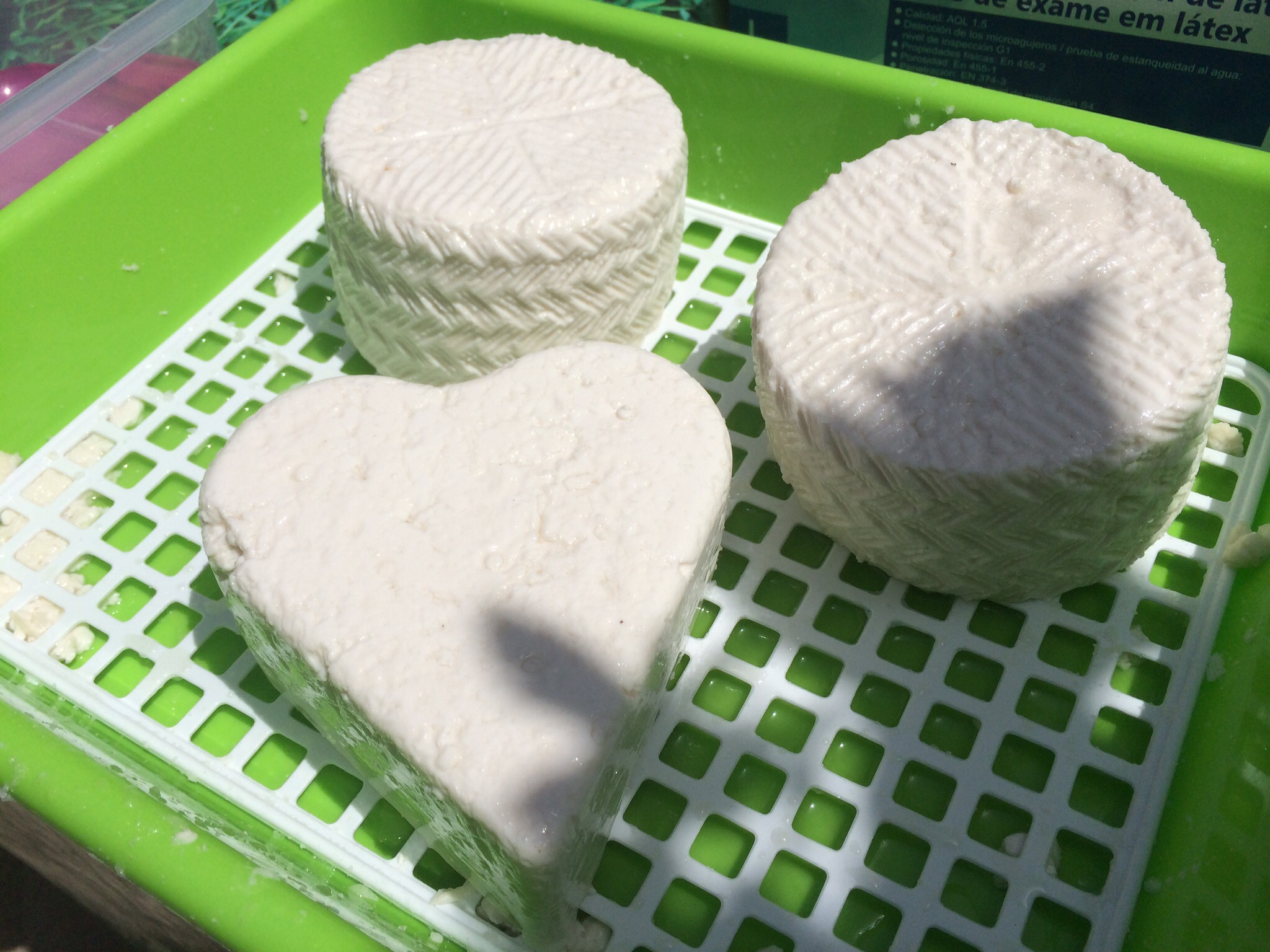
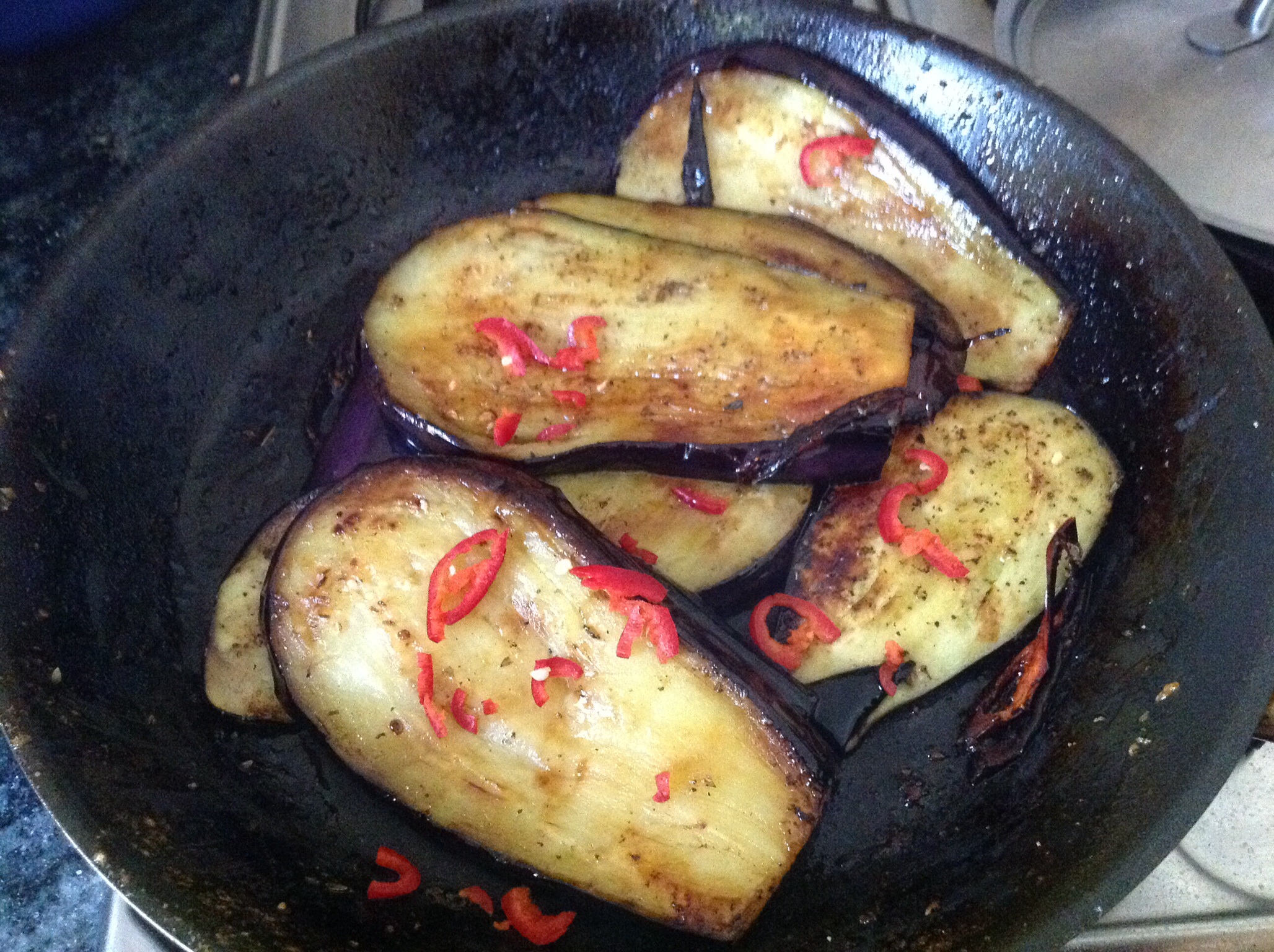
Whilst for the draining process to conclude, I started to think about how I would use the ricotta. So I sliced and fried some aubergine in olive oil and chopped chilli’s then drained them.  In fact, I had previously poached some citrus peel in the pan (see another post for this) and a scant amount of the syrup was still in the pan when I added the oil. Not only did this help caramelise the aubergines, it also sorely tested the smoke alarm. Many times. Enough! Finally the ricotta stopped dripping, and there was about 250g of ricotta nesting in the muslin. And about 3 litres of whey to be used tomorrow to make hallumi.

The final dish will be warm caramelised (!) aubergine on a bed of herby black and red tomatoes, topped with ricotta dotted with more herbs, lemon zest and drizzled with olive oil. And fresh bread. And lettuce and chicory salad.

image

Cheesemaking in Las Alpujarras

imageimageimageimageimage image

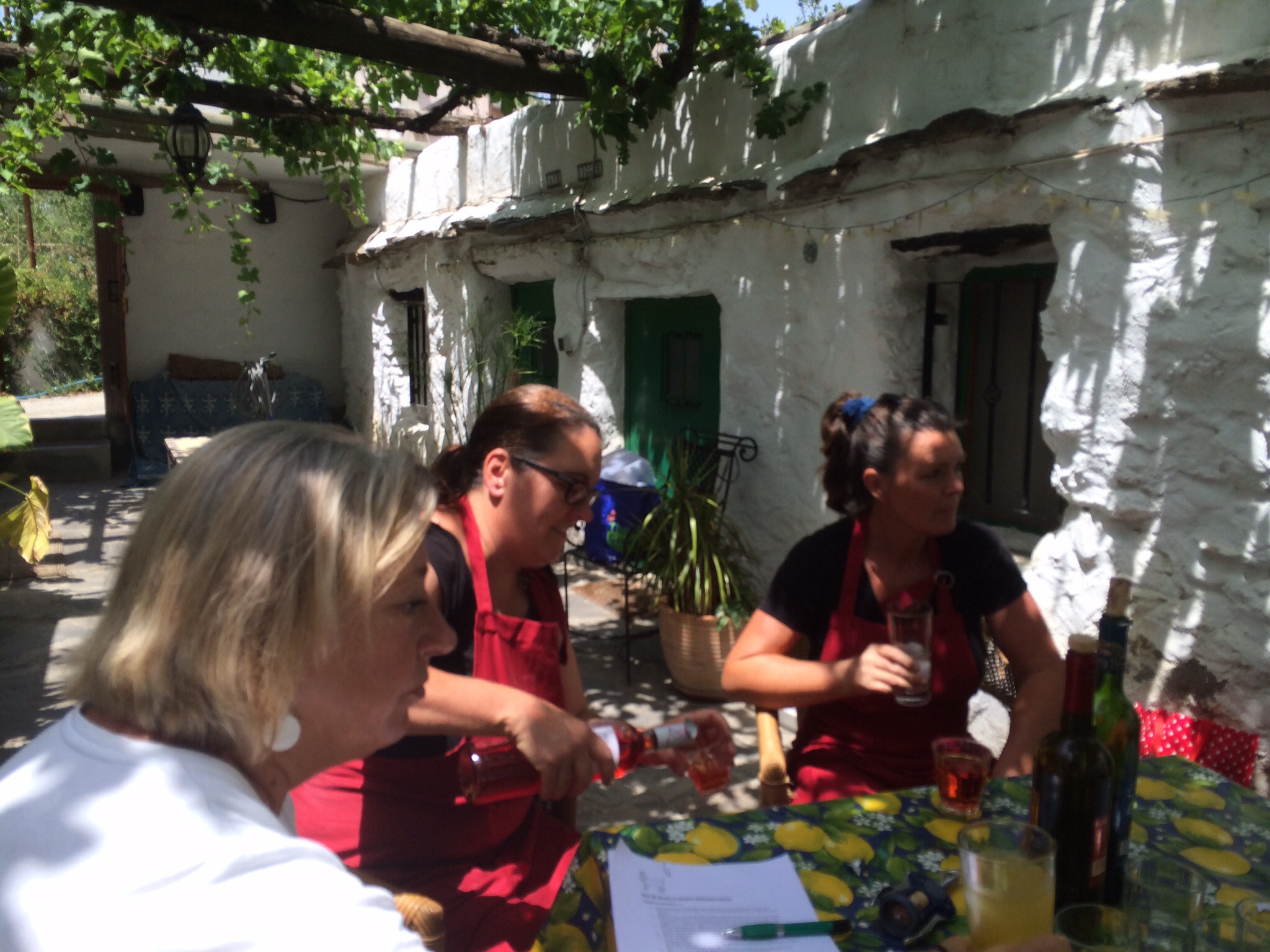
We had only been here four days and I was up to my armpits in whey. Four days recovery time and then I was ready for another adventure. We return to Las Alpujarras – and the area around Orgiva – every year. Call us sad. But we know a good place when we see it! It is also a place that attracts paradox. My friend Carrie and I only seem to be able to meet up here. Even though we both live in the UK. She told me about it and we booked the same day.  And what a happy day it was.  Hot, companionable, humorous. Of the four people on the cheesemaking course run by Sue Halfyard and Tracey Rose (Rosie), one was an artist and the author of a book Carrie had just finished reading the night before – Meg Robinson. One of the cheesemakers, Rosie, is a musician who teaches piano online – a good contact for Alistair. And then there was the magnificent smallholding full of tomatoes, potatoes, garlic, every kind of bean and squash, salad crop and fruit.  The smallholding element was just sheer wonderment.

So. First buy 55 litres of fresh unpastuerised goatsmilk from your local goatherd. Heat it to 32C and add rennet. Leave for 50 minutes whilst you consume home made lemonade, walnut and maple flatbread and delicious samples of cheese in the coolest of courtyards, shaded by vines. Then return with your compadres (Carrie, Carol from Florida and Meg from her tiny village with 69 inhabitants (equalled only the number of dogs, apparently)) to cut the curds contained in buckets, or what you or I would be using to shift leaves, weeds or in my case, used chicken bedding.  Note to self………… Do not need 55litres of goats milk at home, therefore, only need smaller bowls.

Then strain the curds and keep the whey.  Press curds into cheese moulds. Retire to aforementioned courtyard for a long lunch prepared by Rosie (musician, smallholder, seed collector, cheesemaker, cook). All I can say is the risotto with tiny tomatoes and courgettes and studded with soft fresh cheese was superb. The pizzas served with the most beautiful salad were to die foe. But the pudding – a baked ricotta cheesecake with chocolate ganache and blackberries was by far the best thing I have ever tasted. That and the home made lemon vodka licquer that followed.  After an hour or two we merrily returned to our cheeses, released them from their moulds and salted them and packed them into their going home boxes. The cheese can be eaten right now, or dried in the fridge for a few weeks then coated in oil.

We returned home with our prize cheeses and 4litres of whey with which to make ricotta. And from they whey following the ricotta making, follows halloumi. And after that the remaining whey makes great plant food. Or you can bathe in it if you wish.

Thus ended my first cheesemaking adventure. More tales tomorrow about ricotta and suchlike.  At the moment do not appear to be able to post pictures. They will appear later.

photo-13-003

POSTSCRIPT.

Since posting this over two and a half years ago, sadly Carrie died in November this year.  Our annual trips to Las Alpujarra will now be tinged with sadness, remembering her beautiful soul, her kind voice, her wisdom and the love for this particular region of Spain that we both shared.  Whilst there, we would sit for hours at La Cueva de la Luna looking out over the mountains, sometimes finding we had been talking for four or five hours and the food was cold on the plate. Or we would walk in the mountains, or swim, or sit in silence as the night fell and the stars, one by one, appeared in the velvet sky.  Carrie was a woman of deep compassion and constantly thought about the world, her family and her friends. She was a loyal friend and a good woman. The ceremony marking her death at Sharpham Trust last week was the most uplifting and moving experiences, perfectly pitched and sensitively drawn. Carrie was there, enclosed in her beautiful felted wool coverlet, laced with twigs and leaves and flowers. And she felt present in spirit.  So carefully wrought was the ceremony you felt you could almost turn and see her disappearing round a corner.  Remembered with love. Rest in peace mi querido amigo. Besos.

The seasons are changing again

Oh the heartstopping flush of golds and reds, the turned soil, the rain on the window.

What’s on the table tonight? Our own Pink Fir Apples cooked in an emulsion of butter and water with saffron, a deeply flavoursome nut roast and dark dark greens.

Unctious peppers

I should be asleep. But I’m not. I should be out for the count. But I’m not. I should be warm and cosy under the duvet listening to the gentle snorts and incomprehensible sleep mumbles of my man. But here I am with cold feet and jet lag, whiling away the hours till sleep arrived from mid-Atlantic to meet me. So this is for John and Eleanor. You requested it today. Maybe it was the seed of guilt that I had not sent it to you that is keeping me awake!

This pepper dish serves you well for supper with good bread. As a starter. With tapas. Or completely whizzed and pulsed into a puree, spread onto a pizza base and dotted with dollops of mozarella and fresh basil. Or spread thickly on a bagel over some cream cheese. Or spooned over buttery new potatoes. Or pasta. It’s that versatile.

Halve as many red, yellow or orange peppers as you like. But don’t use green ones. Try hard not to break the halves, and leave the stalks on.  Remove the seeds and the white stuff in the middle.  Place in an earthenware dish. Into each pepper half, put one small tomato, one anchovy fillet, one clove of garlic, an olive or two and a leaf or two of fresh basil. Put a few tomatoes into the dish too. Add a scant spinkle of chilli seeds – or leave them out if you prefer. Generously glug golden rapeseed oil (and the anchovy oil) into each pepper, and around them. Add about 1.5ml deep syrupy balsamic vinegar to each pepper half. Season with salt and black pepper.

Place the dish in the middle of a preheated oven at 175C for at least an hour until they are soft. You want the peppers to collapse and to have a slightly charred edge. Leave in the oven for longer if they are not done. Then either serve hot, warm or cold as suggested above with a good Rioja or Barolo.

The Changing of the Seasons

I love this song by Ane Brun – listen to it here on  Youtube

“He falls asleep on her chest, The best sleep he’d ever met. Nevertheless he dreams of some stranger’s caress. He awakes and he knows maybe someone else is supposed to meet his hazy anticipating  eyes. He draws the curtains aside unfolding the first morning light. He glances at his disenchanted life. Restlessness is me, you see, it’s hard to be safe, it’s difficult to be happy. It’s the changing of the seasons he says ‘I need them’ –  I guess I’m too Scandinavian. The relief of spring, intoxication of summer rain. The clearness of fall.  How winter makes me reconsider it all. Restlessness is me, you see, it’s hard to be safe It’s difficult to be happy. And then she awakes, reaches for the embrace he decides not to worry about seasons again”.

1-photo-003 1-photo (3)-002 1-photo (7)-001

I can feel the season changing and although I am a summer bird, I welcome the change in the air. I love the deep red/gold of the fields of stubble in the dusk. I love the smell of big dark raindrops on dry earth. I regret and yet I love the dark furrows of the plough on the fields and the long purple shadows of oak trees stretching across grass. It entices me to get in the kitchen with piles of produce – beans, onions, peppers and apples, sweetcorn and beetroot, pots of spices and jars of vinegar.  Out with the preserving pan, dust off the mobile gas ring (much more efficient for this job than my ceramic hob) and off we go.
Pickles and chutneys are the very essence of alchemy.  Making them is not, in my house, a precise science.  Like most of my cooking it is achieved  through the senses rather than the weighing scale.  It depends how spicy, how tart, how hot, how deep, how fresh you want your preserves to taste. And the only way of knowing is to keep making them. Forget. Then remember again a couple of years later.
Piccalilli (thanks to my personal lexicographers Sue and Shirl), this year, was a wonderful blend of runner beans sold at someone’s gateway, cauliflower from my garden – slightly ‘gone over’ as we say in Norfolk – opened up and the edges just about to turn purple, onion and black podded beans.  I made some brine (3tbsp salt in a cup of hot water then mixed with about 1 litre of cold) then sliced all my vegetables into the brine and left them overnight.  In the morning I drained and rinsed them, then put a mixture of spices in the preserving pan.
This is where the alchemy comes in – and you are going to have to choose how to replicate the flavour you prefer.  For me, it was about 3tbsp coriander seed, a large sprinkle of dried chilli flakes. 3 tbsp black mustard seed, 2 tbsp English mustard powder, 2 tbsp ground turmeric, mixed with 750ml white distilled vinegar (absolutely not brown fish-and-chip vinegar) and 175g light raw cane muscovado sugar.  Bring all this to the boil, stirring gently and let it boil away for a couple of minutes. This simply lets some of the rawness of the vinegar calm down a bit.  Then take off the heat and carefully add all your prepared vegetables. Bring gently to the boil again and cook for about 15 minutes.  Lots of recipes tell you to cook for longer, but I think it completely boils the character out of the vegetables.  I prefer my piccalilli hot, yellow, crunchy and tasty, not mushy and pale green. Take off the heat and let it settle and then judge for yourself how thick is the sauce.  The idea is that the sauce is thick but not gloopy. But definitely not runny.  Remember that the vegetables will rise to the surface whilst cooking so there might be more liquid in the bottom than you think there is. So stir it around and see.
In my alchemy rule book I will always put slightly less liquid in at the beginning than I think I need – because not only will the vegetables will rise to the surface but they will also reduce in size).  If you think you have too much liquid you can remove some with a large spoon. Then, mix some of it with a couple of tablespoons of cornflour and return to the pan, bring slowly to the boil for the final time until the sauce thickens. When that happens, cook for one more minute then allow  to stand for a good 15 minutes without disturbing it.
My habit with glass jars, whether for pickles or jam, is to wash them in very hot water, rinse and dry them then put in the microwave and give them a blast on ‘high’ for a couple of minutes.
After 15 minutes you can decant the piccalilli into the jars. When they are full, give each one a sharp tap on the work surface to bring any air bubbles to the surface, then add a lid and you are done.
Green Tomato Chutney. For years – and particularly in the ’80s – my heart used to sink when I heard those words. For I was reluctantly, rather than gratefully, about to receive yet another pale annual offering in a jar from a neighbour who laboured under the illusion that her green tomato chutney was divine.  I could not refuse.  But I did not agree!
Last year, unlike this, I had a glut of tomatoes, many of which I ended up putting into carrier bags and freezing them whole. The red ones have subsequently been turned into passata, tomato soup, tomatoes braised in butter, garlic and basil etc etc. Today it poured with rain all day – a perfect day for green tomato chutney making.
Into  the preserving pan went about 1.5kg frozen green tomatoes, 2kg frozen red tomatoes, 500g frozen green plums, one chopped onion, 6 windfall cooking apples (on the small side, shaken off too soon by last night’s storm), a good sprinkle of chilli flakes, 2 tbsp fennel seed, 1 tbsp cumin seed, 1 tbsp ground cumin,  three fat cloves of smoked garlic from the Isle of Wight, 1 cinnamon stick and two knobbly bits of peeled fresh ginger (don’t chop it up – more on that later), 1litre white distilled vinegar, 1tbsp salt and 175g light raw cane muscovado sugar. Mix it all together and off we go.  Yes. The fruits were whole and frozen. No the ginger wasn’t chopped.
I brought it all to the boil and then settled it down to a gentle simmer for 2-3 hours. Chutney such as this (unlike the fresh Indian chutneys) should be dark and full of flavour.  Cooking these proportions of vinegar and sugar over a long period makes something quite magical happen to the liquid. It deepens and darkens, becomes unctious and glossy.  But – I hear you ask – what happens to the frozen fruit?  It simply reduces itself to a mush, including the skins surprisingly enough. So you don’t need to defreeze and chop. And what of the large knobbly bits of ginger, you retort?  Fish them out carefully and chop them up at the end of the cooking process, then return to the pan. That way you get a hot fresh gingery hit occasionally, rather than simply having ginger in the mix. They will be easy to identify because as everything reduces, the ginger doesn’t – in fact it plumps up in the liquid.    The plum stones also rise to the surface so simply pick them out. By the way, don’t be tempted to use powdered ginger – do you want your chutney to taste like a cake?
The same rule applies as for the piccalilli ie the solids will rise to the surface. so make sure you know how much liquid is really in that pan before you decide to pot it up. Leave it to stand for 15 minutes before you do so.
Remember – everyone’s preserves are different. You can make your mark by using the ingredients you have available and adjusting the spices and seasonings to your own taste. The key is understanding how much liquid to use, and how long to cook.   In my unwritten rulebook the answers to those two conundrums are less than you think for the first, and longer than you dare for the second.
 

1001 ways with a courgette

For years my friends teased me about my obsession with writing a cookbook on 1001 things to do with mince. I guess those times were linked to cooking on an extremely low budget and I needed to do something to lift my spirits; like writing a cookbook about mince.  I can see the irony in it now.

But here I sit with a glut of courgettes, as there is every year. And every year those same friends say ‘why dont you write a cookbook about 1001 things to do with a  courgette’. At risk of appearing both rude and crude, I have resisted.  However here are a few ideas.

COURGETTE WITH LEMON

Slice the courgettes on the diagonal, drizzle with olive oil, rock salt and black pepper.  Heat a ridged pan till it is smoking then sear the courgettes on both sides, leaving them to cook until they are only just done.  Then turn into a warm dish and add the zest of a lemon and chopped lemon balm, a squeeze of juice and some beautiful golden rapeseed oil

COURGETTE FRITTATA

Buried somewhere on this blog are a couple of versions of this summer staple.  Grate 2 large courgettes and lay them on a clean tea towel. Sprinkle with salt and leave for 10 minutes. Then wrap the grated courgettes in the teatowel and squeeze hard over the sink. Loads of water will come out. You want to get it as dry as you can.  Then soften shallot  in oil in a pan the pedigree of which you can trust in the oven – my trusty  copper frying pan is the one I use most often. It looks dead posh but actually came from Sainsburys about 12 years ago.  I digress: when the shallot is soft, add squeezed garlic – as much as you like – stir it around a bit then add a little more oil and then the courgette.  Season with pepper but no more salt, then add about 200g feta or goat cheese or goat curd and a really big handful of chopped fresh mint and chives. Then beat 4 eggs with 80ml plain yogurt (or you could use cream, or milk) and pour over the courgette and cheese mixture (keeping the heat fairly high). Move the mixture around a bit to make sure the egg is well distributed and  keep on that high heat for 5 minutes – the purpose of this is to seal the bottom so it will easily turn out of the pan.  Then clamp on a lid, turn down the heat and cook on low to medium for about 10 minutes. After that just put it under the grill till the top is golden brown. Then invert onto a plate and serve, you can eat this hot or cold. However there’s never enough left to eat it cold in our house.

COURGETTE TEMPURA WITH GARLICKY TOMATO AIOLI

Slice courgettes  on a broad diagonal so you get plenty of surface area.  Beat one or two egg whites (depending on the size of the eggs) till really stiff, then fold in 75g cornflour, 50g plain flour, a pinch of salt.  Then add the essential ingredient – about 190ml very cold carbonated water. Mix it all together, dip courgette slices into cornflour till lightly coated, tap them on the side of the plate and then into the batter and immediately drop into very hot rapeseed oil. They will pop and hiss and fluff up and will be ready in 2 minutes.  Drain on kitchen towel.  For the aioli, take 6 tablespoons of excellent mayonnaise mixed with some tomato puree and crushed garlic to your taste.  Or you can make it yourself with a stick blender.  The trick is to keep the blender flat on the bottom for 10 seconds then slowly lift it up.  It will turn the ingredients into a beautiful emulsion 100% – every time. Use 2 egg yolks, a teaspoon of Dijon mustard, a pinch of salt, 15ml white wine vinegar and 250ml rapeseed oil. Then add a tablespoon of tomato puree and a crushed clove of garlic. I found this really easy method on the BBC Good Food Youtube clip and it is completely failsafe.

COURGETTE IN NUT ROAST

Use my usual recipe for nutroast already on this blog, but instead of using tomato and cheese in the middle, use grated courgette. Treat it to the salt and teatowel method described on this page, then mix with fresh herbs like lemon thyme or marjoram, and add a 1.5 cm layer in the middle of the nut roast. If you add more than than then I suggest increasing the cooking time.

INSIDEOUT NUT ROAST

Cut the courgettes in half then scoop out the seeds in the middle till you have a channel along ithe length. Lay the courgettes on a thick bed of seasoned de-seeded chopped tomatoes and spring onions, then lay the nutroast mixture on top of the courgettes.  Season well and cover with more chopped tomatoes and spring onions. Bake covered in foil at 180 for 20 minutes then uncovered for 10 minutes.

SWEET TREATS

COURGETTE MUFFINS

Think of carrot cake. What’s the difference using a courgette? Not a lot is the answer. Essentially the carrot/courgette/whatever adds some texture but mostly it adds moisture.  So any cake recipe which calls for grated carrot can also use grated courgette.  For this recipe grate 2 large courgettes (about 200g) and treat as before. Then add them to 225g wholemeal flour, 1 tsp bicarbonate soda, the zest of an orange and 100g sultanas.  Whisk 2 eggs, 175ml rapeseed oil and 4 tablespoons of orange juice into the mixture.  Pour into lined muffin tins or greaseproof cups and cook for 25 minutes at 180C. bet there won’t be any left by tomorrow!

CHOCOLATE COURGETTE CAKE

OK so beetroot and chocolate is de rigeur.  But I prefer courgette!  Grate 500g courgettes and prepare as before.  Mix 150g self raising flour and 200g wholemeal flour with 1 teaspoon of mixed spice and 300g raw cane sugar. I advise not using muscovado, which makes a lot of liquid in the cooking.  Whisk together 3 eggs with 175ml rapeseed oil, two teaspoons of good vanilla extract. Then add the courgettes and the liquid ingredients to the dry ingredients and mix carefully.  Finally add 140g toasted chopped hazlenuts, or even better in my view, pine nuts.  Pour this into a lined 24cm springform tin and bake for 40-45 minutes.  When it is done, let it cool completely, remove from the tin then carefully melt 200g 70% cocoa solids chocolate  in the microwave and add 100ml hot cream.  Mix well and it will thicken.  Leave it 5 minutes then pour this ganche onto the cake.  You can keep your devil’s foodcake.  This is the one for me – light, deeply chocolatey, studded with nuts and a gooey topping. I dare you to eat only one slice!

Marsh Pig Salami

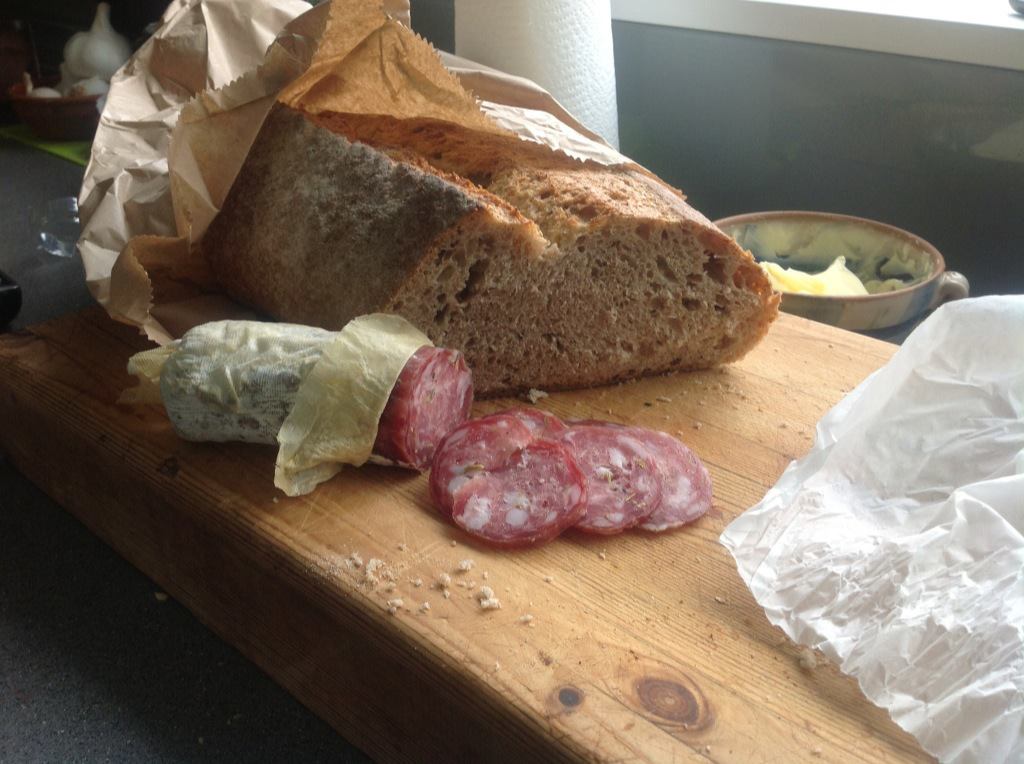
Heavenly produce from Wymondham Farmer’s Market. Everything a Farmer’s Market should be – small, great range of food, plants, meat, bread,chutneys, eggs, fish, charcuterie.  Here’s my favourite combination. Sourdough and salamiMarshPig salami with fennel, a glass of cold beer on a hot day and Tour de France on the TV.

Friends in high places

image

imageA little shopping in Orgiva this morning, prior to the family arriving tomorrow….. Language adventures in the butcher’s (would you chop the chicken into 10 pieces please?), 10 little lamb chops, a handful of minced pork which was neatly dispensed into a greaseproof paper cone and folded down at the top. Then the embarrassment of coming home and realising I had picked up someone else’s shopping.
On my way up to Mecina Fondales I dropped the bag of shopping back at the little corner shop. But the helpful young woman who had served me, and who spoke reasonable English – well to be honest, it was 10 times better than my Spanish – had been replaced by a monosyllabic bewhiskered granny who didn’t know what I was talking about! So I just gave her the bag in the end and hopped back in the car feeling that my efforts were less than adequate

Drove up the mountain road behind Orgiva, past Canar, heading up and up, past Capileira where the European funded road programme becomes less evident. More concrete blocks. Less Armco. Decided that on balance I prefer driving to being a passenger on these roads. The views are breathtaking which of course is the paradox of being a passenger – you can loom at the view but you also see how far down it is! Turned off the main road just before Pitres and headed down to the Trevelez valley to Mecina Fondales then out of the Fereiola ‘road’. I was heading for a bar in the middle of nowhere to meet Carrie. I found it. Cueva de Luna Mora. Owned by an Argentinian, in the middle of Las Alpujarras, with a reputation for some of the liveliest live music and the best Pizza’s. i can vouch for the pizza. Carrie and I talked non stop for four hours – the intervening 8 years counting as nothing – as it does when good friends get together. We parted, drove in different directions but this was not significant. Las Alpujarras had woven its magic again.

Low carbs

Low carb diet. So why  do I feel compelled to bake cakes? Two batches for the birthday boy to take to work tomorrow.  They smell divine. But not a crumb has passed my lips.  Try these chewy buttery pecan slices. They have the consistency of Brownies but are suffused with pecan and maple syrup.  The recipe called for tons of sugar, and walnuts. But as is often the case, a little recipe tweaking was in order.

Cream 175g butter (only butter will do) with 100g caster and 75g mucovado sugar till very light and fluffy. Add 1 tbsp flour (it stops the eggs curdling). Then beat in two eggs, 1tsp vanilla extract, 150g plain flour and 50g medium oatmeal. When the dry ingredients are fully incorporated, add 75ml maple syrup and fold in 100g broken pecan nuts. Spoon the mixture into a rectangular tin lined with baking parchment, plant pecans in neat rows along the top and bake in the middle of the oven for about 30 minutes at  160c.  Hope you enjoy them boys!

Banana bread

Sometimes, and in spite of our best efforts, bananas just go manky, don’t they?  Come into a warm room and you can spot a manky spotty brown banana at 20 paces.  I found four skulking in the corner today, just screaming out to be made into Banana bread.  Some form of torture ensued as I am on a  low carb diet. Would I be able to resist it if I made it? Would I eat it all but be unable to erase the smell of baking banana bread, so that when David came in and his nose twitched I could not deny the baking of it? Nor the consumption of it?

Well I am pretty proud of myself because it has been out of the oven for two hours now and I haven’t touched it. Not even sneaked a little bit. So I think I am past the tipping point and might be into recovery!

This simple recipe was retrieved from the back of a brown paper bag in the mid 1970s.  The place was Croydon market. Wonder if it is still there, opposite Davey Place? Doubt it.

I use an electric hand whisk for this because I don’t own a Kitchen Aid, nor a Kenwood Chef.  I used to have a KC which my mum bought me for my 21st but I didnt realise the value of it, nor its potential longevity and I sold it for £20 in the mid 80’s when I was broke.  If anyone is thinking of buying me a present, I would prefer to replace the KC rather than have a KA.

Beat together 125g butter with 200g golden caster sugar, two eggs, a teaspoon of vanilla extract, 200g wholewheat plain flour, 1.5 tsp baking powder. Then fold in four mashed bananas and 125g broken up walnuts.

Pour into a lined tin and bake at 150C for about 50 minutes.  I tried mine in the microwave combination oven today and it worked a treat. Another little triumph for the environment!

On a generous day I would serve it just warm, with a thick slab of butter on it.  On a bad day I would do the same but eat it in a locked room so no-one could see.  On a virtuous day like today I SHALL NOT TOUCH IT!

Muffin tops

Here’s a dish to match the winter waistline.  Hetty cooked this a couple of weeks ago one cold windy night in deepest Suffolk. We had been working outside all day and when she brought it to the table we proceeded to pitch ourselves over the top of the dish and drown in a rich, fragrant, warm, herb infused dish of braised vegetables with the most wonderful muffin top.  And muffin tops  were what we ended up with after third helpings!

Originally posted on BBC Good Food website as a beef stew, it is easily subverted into a vegetarian version.

Gently sweat three or four banana shallots or onions in olive oil, chopped garlic and a bay leaf.  Meanwhile put a good handful of dried mushrooms in a pan with 300ml water, bring to the boil and cook for about 15 minutes till the mushrooms are dehydrated and the liqour has reduced to about 200ml and inky dark.  Chop carrots, celery, celeriac and swede into 2.5cm cubes and add to the onion with a little more oil, a new bayleaf, a little dried thyme and a pinch of dried chilli. Stir and put the lid on and cook for another 10 minutes or so.  Then add 450g chopped tomatoes (minus the pips). Stir again and cook for another 10 minutes without the lid, then add the mushrooms and the liquor and 25ml Worcestershire sauce.  Taste, once all the ingredients are incorporated, and adjust seasoning. You are aiming for what I would call a heavy, rich, woody flavour rather than thin and under-seasoned.  I have subsequently added whole vacuum packed chestnuts and fresh mushrooms and it is equally scrummy.

If you have cooked the vegetables in a double handed pan that can be transferred to the oven, all the better.  Otherwise, transfer to a dish.  Now for the muffin top.

Into 125g plain white flour mixed with 100g wholemeal flour (all purpose, not bread flour) mix 1 tsp salt, 2 flat tsps of mustard powder, 100g strong grated cheddar, 2 tbsp olive oil and 150ml milk.  Mix together until it looks like a wet scone mixture then simply spoon it on top of the vegetable stew base, sprinkle about 50g grated cheese on top and put on the middle shelf of the oven at 150C (or 130C in a fan oven).  Check it after 15 minutes, but its more likely to be  ready in 20.  The trick here is to use a relatively shallow dish rather than a deep one so that the muffin top cooks through. The first time I cooked this, the chickens really enjoyed the uncooked muffin that lurked neath the fine brown golden crust!  I had the fan oven temperature too high and used a deep rather than a wide dish.

Unexpected pleasures

Poor mother is ill and not coming for Easter as planned. This meant an unexpected day out for us both today. We meandered down through Banham to Stanton farm shope where they have a great cheese counter, baker and the best treacle back bacon. We came away with Suffolk Gold, Hawes Reserve Wensleydale and Old Amsterdam. And bacon. And other stuff.

Bury St Edmunds is always a surprise, such a civilised place. Grand Georgian houses cheek by jowl with medieval houses. We spent ages in The Cook Shop, replenishing our stock of 40 year old wooden spoons. Next time i do that i shall be 100. Scary thought.

We fell upon Gastronono-me, a Deli and artisan bakery which offerd delights, hummus with chilli, olives, soda bread. That’s supper sorted. Bread, cheese, olives, Rioja, sofa. Perfect.

Just as we were bewailing the paucity of vegetarian eateries we stumbled upon Josef’s Vegetarian Cafe in St John’s Street. Apparent,y they were looking for premises for a Charity shop and decided to open a vegetarian restaurant instead. I like that sort of serendipity. I had a celeriac steak served with mustard sauce, potato wedges roast Portobello mushroom and roast tomato with a perfectly dressed salad. David had a well spiced lentil burger on a toasted bun with tomato salsa. Both were perfect and we recommend you try it for yourselves.

I’m not a fan of pasta

Unlike the rest of my family I am not a great fan of pasta. Maybe I’ve never eaten great pasta. Or maybe I can conjure a meal without the need for quick-pasta solution. Either way, it has never been a first port of call when deciding what to eat. Consequently, I am ashamed to say, I have never made pasta. Until  yesterday. I was pretty pleased with the result but I learned a lot whilst making it.

  • you don’t need a pasta machine
  • the food processor (again) was king of the kitchen
  • my standard 30 year old rolling pin was too short
  • it needs to be much thinner than you think
  • it is a good way to spend an hour in contemplative mode
  • I should have worked on the round table and not the work surface
  • unlike pastry it is AOK to stretch the dough as you roll it (although I didn’t at the time and later watched a really helpful clip on YouTube

300g 00 flour, 4 eggs, 1/2 tsp salt, 25ml olive oil.  Into the food processor you go and whizz round till it begins to bind.  Then turn onto a floured surface and knead away, as with bread dough, for 10 minutes.  Wrap in clingfilm then put to one side for at least half an hour. It is beautifully tactile, smooth and springy and golden yellow.

De-seed and peel half an onion squash (or any squash, but the more orange the better the colour). Chop into 2cm dice and throw into a hot frying pan (or roast them) with a little olive oil, a sprinkle of chilli flakes, a grind of black pepper and a couple of bay leaves.  Put the lid on and shake around every five minutes until soft. Then add some sea salt to taste.  When cool, mash the squash (having removed the bay leaves).  Combine with 200g ricotta cheese. Add finely chopped parsley and a grating of garlic. Check seasoning again.

Now for the pasta.  What I did was to roll it out as I would roll out pastry till it was very thin. The mistake I made was that even though I thought it was rolled very thin, when cooked, of course, it thickens up. So it needs to be even thinner.  The YouTube clip subsequently taught me the helpful trick of using a long thin rolling pin and to roll the pastry onto the pin, stretching the pastry as you go (watch to clip to see what I mean).  No doubt many of you know this already, but it was news to me!

As it was, I rolled out the pastry, dropped a teaspoon of the ricotta and squash filling in rows across the pasta then covered them with another layer of pasta, carefully pressing out the air before sealing the edges, then cutting into ravioli shapes with a sharp knife.  This technique worked perfectly.

Then I dropped half a dozen ravioli into boiling water and cooked for about 3 minutes, drained onto kitchen paper and served with butter sauce (melted butter with a tablespoon of the cooking liquor to emulsify it).

The result was very pleasing.  The filling was delicious, but the pasta a little too hefty for my liking. I think it will be improved by refining the rolling technique.  I shall try again.  By the way you might wonder where are the pictures – the answer is that I have sand in my camera and its not working at the moment. More of that another day.

Going through Customs

I spent an entrancing two days working in Co.Down and Co.Armagh a couple of weeks ago. Intense meetings were balanced by journeys between Newry and Downpatrick in deep conversation with Peadar who told me about the history of the area – his homeland – and the magic in the landscape.     Today the weather forecasters are describing deep snow on those hills but as we drove along the valleys dotted with deserted flax mills on those two days –  Moyallen Road, Gilford Road, stopping at Scarva for an unexpected coffee sitting outside on a warm spring morning, beside the Sustrans National Cycle Track, then on through Tandragee, Pontyzpass –  the hills rising steeply either side of us  were alive with signals of spring; soft grey willow, trees in bud, daffodils, broad sweeps of aconite on the edge of standing water, green moss topping stones and the brightest and most heavenly greens that can only be experienced in Ireland.

Peadar is a wildfowler and we shared stories about the flavour of game and bird. He described trudging through the glens and over the hills in contemplative mindfulness. A steady pace. Maybe never raising his gun to the sky the whole day, but returning home a satisfied man – a man at one with his landscape.  I will never forget his story of an old man he knows who split the tender breastbone of a woodcock with his thumbs and took out the liver.  Offered a morsel, Peadar took it an pronounced it good. Nectar. To some this might appear unnecessarily  basic. To me it somehow connected the man to the very soil and the air which was his history and his blood, and I find no fault in it.

On my homeward journey Peadar promised me a wild goose and a Teal.  My only worry was getting them through Customs at the airport (no hold-luggage, just hand-luggage). Sure as eggs, I watched my bags diverted into a siding after they passed through the xray machine.     A stern finger beckoned me over. Are these your bags madam?  Yes.  Would you mind explaining the bag of bones in your hand luggage? Not at all, it’s a goose and a Teal. Did you pack your bags yourself madam?  Yes.  Did you pack the goose and the Teal?  No I didn’t. They were given to me by a friend straight from his freezer. At this point my rational brain started to kick in.  Frozen meat with cavities. No I didn’t pack it myself, I was given it.  I can see why they were beginning to look suspicious. Would you mind unpacking the bag with the goose and the Teal madam? Of course. So I unpacked the wildfowl so carefully wrapped by himself. In newspaper. Six separate carrier bags with knots.  Finally the poor birds were revealed, all frozen and bare with their little legs and wings tucked underneath and a dark blush of what had been feathers spreading across their breasts.   Still frozen solid it was impossible to see if anything was buried inside them. I was ready for them to be confiscated. Shame.

However, not enough to expose the poor birds, I too then taken aside and suffered the same indignity.  And more. You can imagine.  It took a while…….  and then it was all over and I was released, as were the birds, and we were reunited. I repacked them in their newspaper and plastic bags and was sent on my way with a smile. Or was it a smirk?

I’d just like to say that the Teal has yet to be eaten but the goose?  It was the tastiest little wild goose on the planet.  Roasted quickly after an overnight bath in olive oil, garlic, crushed juniper and caraway.  Served with creamy mashed potatoes and dark greens and a reduction of juices.  Heaven on a plate.

Samosas with mango salsa

A long run of visitors and little time for the blog.  Apologies.

Tonight we had a re-run of last night’s farewell curry festival when Mark spent the last night with us before returning to Norway. I was sad to see him go – we had rekindled so easily, the friendship of our childhood and shared many happy family memories.  But I made far too  much curry  – lamb rogan josh, eight hour chick peas, hot and sour vegetable curry, cauliflower and potato curry,  mango salsa, potato and pea samosa – which meant that tonight there was only a small amount of cooking to do (ie replenish the samosa stock).coriander and coconut chutney

So here’s the samosa recipe.

You’ll need your food processor for ease, but you can also mix the pastry by hand.  Mix together 300g gram (chick pea) flour, 1 teaspoon salt, 25ml vegetable oil, 1 teaspoon black mustard seed and 1 teaspoon cumin seed.  Then add cold water bit by bit until you have a soft dough.  Put the dough in a plastic bag and leave for about an hour.

Dice four medium sized potatoes into small dice (don’t bother peeling them).  In a shallow pan heat about 1 tbsp oil then add 2 tablespoons of the garam masala spice mix (on this blog). Cook it gently for a minute, then add half a finely chopped red chilli.  Then add the potatoes and mix in with the spices.  Fry these for about 5 minutes then add 75ml water and put the lid on, cooking the potato gently until all the water has disappeard and the potato is just cooked.  Then add a mug full of frozen peas, stir into the spice and potato mix and then add some salt.  Take off the heat and allow to cool completely.

The key to a good samosa is remembering two things.  1) the filling should be hotter (chilli heat) and slightly saltier than you think it should, and 2) the oil for the final frying should be smoking hot (that way the samosa gets crispy but doesn’t absorb the oil).

Take the dough out of the bag and knead it.  It should be fairly soft but not sticky.  Then scatter the work surface with coarse semolina (I use this instead of flour), pull walnut sized pieces off the dough and roll out quickly  and cut into circles.  Then cut each circle in half.

P1020863Pick up a semi-circle of pastry and dampen the straight edges, then fold it and press together the straight edges.

P1020864P1020865Now open it out so the open edge is at the top and fill with the spiced potato and peas, then dampen the open edges and pinch together carefully.

P1020866P1020867P1020868Repeat this many times, getting into a gentle, contemplative rhythm, until you have tons of samosas looking like this.

P1020869Now, simply fry them in very hot oil, a few at a time so the temperature of the oil doesn’t drop, probably about one minute each side, then remove onto kitchen towel.

Serve piping hot with mango salsa  finely chop one green mango, and mix with half a chopped red chilli, a one inch cube of finely chopped fresh ginger, mint or coriander leaves, a little salt, about a teaspoon of sugar and the juice of one lime.  Then fry a tablespoon of black  mustard seed in a tablespoon of oil with some more chopped chilli for about 30 seconds, then pour over the salsa.

Hope you enjoy them!.

Is it me?

The plan was to have a quiet night in with friends, having undertaken a little gentle prep during the day.  On the menu was a velvety smooth cauliflower soup with deep fried spiced cauliflower and onion bhaji type bites, then tuna, scallops and prawns pan-Asian style cooked on the Tepanyaki with a sharp and tangy green mango and papaya salad, closely followed by lemon curd ice cream with bitter orange sauce and little choccy morsels on the side.

The day went well.  Monty helped me make cakes. Gerry came for a cup of tea. And cakes.  I was a little late returning Monty home and although I had intended to at least start the soup (I’d already coated the fish with some sesame oil, crushed ginger, lemon grass and garlic in the morning and put in a covered bowl) but had failed, the lure of the sofa and a good natter got the better of me in the afternoon.  So, back home, with John and Het due in an hour. On with the soup.  First find the cauliflower.

I know I purchased it on Thursday with a load of other stuff. But could I find it?  Not in fridge, not in utility room, not rolling round in the boot of the car, nor the footwell. Not in with the spuds. Not in a shopping bag. Couldn’t find it anywhere.  It was a bit like when I lost the child benefit book – eventually found it in the cheese box in the fridge – or when I lost the rent which I had put in an envelope and inadvertently thrown into a wastebin attached to a lamp post.  I knew it was somewhere, but where?

I had already softened chopped onion and garlic and added roasted ground cumin and a little turmeric.  But no cauliflower to be found.  Whizz over the road to my lovely neighbour Jasmine who never fails to deliver when I am in a muddle.  Jasmine, do you have a cauliflower?  Yes dear, but only frozen.  I don’t mind, that will do.  Here you are.  Frozen rectangle of cauliflower handed over I fly back up the drive, release it from its plastic wrap and hurl into the saucepan without looking at it really.  Slam on the lid to let the steam do it’s business, whilst I crank up the food processor with the coarse grater, and shred some potatoes and onions instead of carefully picking little florets off the cauliflower.  It will have to be crispy potato and onion bhaji’s instead.

Frantically dry roasting cumin, coriander, black peppercorns a few chilli flakes and some black cardamom in a shallow pan with one hand, I blindly stir the cauliflower in the saucepan: health warning – never put your head over the pan whilst dry roasting spices.  Yes, frozen cauliflower is breaking down nicely in the pan.  Boil the kettle.  Mix grated potato and onion for the bhaji’s, add two large tablespoons of gram (chick pea) flour into which I have mixed ground cumin, coriander, chilli, turmeric, salt.

Now, to inspect the cauliflower.  I peer down into the depths of the steamy saucepan to encounter mashed potato.  Freezer warning: always label what you put in the freezer.  It looked knobbly. It was white. In its frozen state it looked like cauliflower.  But it was mashed potato.

Hell’s teeth.  My plan for velvety smooth cauliflower soup gone completely to pot, I chop parsnip into small pieces, add to the potato then add stock and bring to a furious boil.  I wonder if I can pass this soup off as cauliflower?  No, don’t be ridiculous. It’s potato and parsnip. Curried. Hey ho!

At this point John and Het arrive, the kitchen is in turmoil.  Every cupboard door open, the fridge peeping to itself because the door is ajar, a trail of gram flour across the floor, every bowl and pan in use. Wrappers scattered across the work surface.  Spoons hurled into the sink. At this point I gave up being on the wagon and downed my first Bloody Mary and we all laughed a lot.  Then Will rang (it was his 35th birthday, but I was a bit distracted). Then David came in, took one look at the kitchen and looked at me, quizzically.  Problem?

But from there-on-in it got better.  The Bloody Mary’s helped.  It was another moment when the queen of the kitchen lost it, found it, lost it again then regained equilibrium ably assisted by a well refined sense of the ridiculous.

And so, later in the evening, all was calm.  The table laid, the house warm, the wine bottle open – we consumed a delicious spiced potato and parsnip soup, with crunchy spiced bhaji’s, followed by the fish which was flashed onto the Tepankaki with a little sesame oil, served with the mango and papaya salad spiked with crushed roasted peanuts, chilli, lime, fresh coriander and fish sauce along with steamed Pak Choi with a little soy and honey dressing.  Pudding was the doctored lemon parfait (Nigel Slater) – frozen a week ago (that was lucky!) served with bitter orange sauce (actually the strained liquid from the three fruit marmalade that looked as if it wasn’t going to set, so I removed some of the liquid and put it in jars in the fridge) and tiny bite-sized Florentines (Waitrose).  A triumph!

In the middle of the night I awoke with a start.  Nudged David, and declared ‘ I know where that cauliflower is’.  Grunt, groan, sigh from beside me.  ‘Where is the cauliflower my sweet’.  ‘It’s in the green recycling bin of course’. ‘Of course it is dear’.  I WAS going to put the cauliflower in the utility room and I put it in a box that I was going to put in the recycling. But between the kitchen door and the lobby door I (typically) got distracted and simply hurled the whole lot in the green bin.

So the following morning if you were up early enough, you could have found me outside in the drive, looking my best in slippers and dressing gown, emptying the green bin.  Eureka! There was the cauliflower.

Science

I was watching that fascinating and easy on the eye combo of Andrew Graham-Dixon and Georgio Locatelli a few weeks ago. Locatelli, tossing his curly locks and smoothing his hands over his thighs, mentioned a seminal Italian cookery book – the Italian Mrs Beaton – and I bought a copy.  Published in 1891 Science in the Kitchen and the Art of Eating Well by Pellegrino Artusi proved to be as humorous and as charming as Locatelli described.

“I had taken lodgings in the Piazza del Voltone, in a new whitewashed villa run by a certain Domenici.  That night I felt the onset of a frightening disturbance in my body…’Damned Minestrone! You’ll never fool me again!’ …. Day came and feeling myself totally drained, I rushed to the first available train and escaped to Florence where I quickly revived   Monday the sad news reached me that cholera had broken out in Leighorn and the first to be struck dead was no other than Domenici…. And to think that I had blamed the minestrone!  After three attempts and having i proved upon the dish each time this is how I make it ……………….

Genes


IMG_1494Lovely conversation this evening with number one son in Newcastle which ranged across the usual  subjects, work, life, the universe, plans for our joint holiday in June.  But also an intense little nugget about what he and Katie have been cooking this week – clearing the carnivorous freezer and decks before they commence a pescitarian February.

It went something like ‘ Well mum we tried some of those Boerwors sausuages you sent from Bunwell butchers, they were brilliant, we also did some great duck with a confit of cherry and wine, some fresh pasta with Cavalo Nero and softly poached eggs………….’

Clearly the genes are there.  I used to love it when he would ring me from his flat as a student (with 6 girls) saying ‘Mum, I’ve got this piece of pork and I was thinking of ……………………’  or ‘Mum I was wondering whether anchovies really really work with lamb, what do you think’………………..

The best gravy I ever tasted, he made when the family cooked a birthday meal for me a couple of years back.  Admittedly, I gave a little tuition on roasting the bones in the pan etc etc.  But the result was legendary. And the skill was his alone.

WILL GNR 06

Thinking of inviting him to do a guest page on the blog.

Japan’s school dinners

Great article in Washington Post on school meals in Japan.  Inspiring  


Chicken with lemon

Just had conversation with a new follower on Facebook.  What to have for supper tonight?

Depends on how much time you have Norma.  But I know you have chicken and I know you have mince.  Have a look at the Lamb Kofta recipe on this site. You can make it with beef mince or lamb mince.

But tonight I’d do chicken simply because cold nights call for gravy!  Don’t know if you have a whole chicken, pieces or fillets.  This recipe works best if you have bone in the meat.  If you have a whole chicken, first sharpen your cleaver……………………..  then chop off the legs and the wings.  Carefully cleave down the backbone so you have two halves of chicken, then cut again into two or three pieces depending on the size of your chicken.  Essentially you are looking to have fairly even sized pieces of chicken.

Now.  Take a plastic carrier bag.  Yes that’s right.  Throw in a handful of flour or polenta, season well with salt, pepper, about a teaspoon of smoked paprika if you have it – if not cayenne or chilli powder. But  not too much – we are looking for flavour and layers of flavours here, not a big hit of chilli heat.  Throw in your chicken pieces and bounce then round a bit till they are coated in flour.  Then take out of the bag and put on a plate.

This recipe is easiest if you do the next stage in the same pan you will be using for the rest of the cooking (just saves the washing up). So use a double handed wide shallow saute pan with a lid for preference. If not use all the pans you want but end up putting in a shallow-ish pan not a deep casserole.

Put a good glug of olive oil into the pan, slice 2 large onions and a bulb of fennel and fry gently till very soft. Only then put in two squashed cloves of garlic. Cook for one more minute. Remove onions et from the pan but dont wipe the pan.  Add more oil then bit by bit add the chicken pieces  you are aiming to brown them so don’t put in too many at once or you will simply steam/stew them.  When all pieces are browned, put  the onions and fennel back into the pan, turn the heat up high and pour in a glass of dry white wine, or a good sglug (my word – its a cross between a splash and a glug) of Noilly Prat.  Let the alcohol evaporate by boiling madly for a couple of minutes, then add about 750ml chicken stock.  Now comes the first secret ingredient. ~Throw in some good  black olives (juicy ones, not the dried out apology for olives you get in tins).  Cook gently with the lid on for about an hour. Then remove the lid and check the seasoning.  You should have chicken pieces which are golden and scrummy spicy rich  juice which is beginning to thicken.  If it isn’t thickening, simply cook for another 10 minutes with the lid off.  The stock will evaporate a bit and become more intense.  Nearly finished!

If you have made my preserved lemons (see posting on this site), take out half a lemon, and wash under the tap.  Dry, then remove the fleshy part.  Then slice the rind thinly and add to the chicken, along with some chopped tarragon and flat leaf parsley.  Incorporate it all into the juice and cook for five more minutes.

Serve this with rice, or with flatbread, little roast potatoes or mash. Your choice.  Yummy.

New books

Deep sigh. Settled down a couple of nights ago to talk about my new books but router strength insufficient to reach my iPad in the sitting room.  Gave up with frustration, hence the title but the empty page!  What I was going to say was……………..

I find myself wanting to start each new page with ‘Its a lovely day’ or ‘When I was walking I was thinking………..’ or ‘The woodburner is blazing and I’m lovely and cosy’.  It must sound so self-satisfied. So I just want to de-bunk any notion that we live in some sort of idyll here!  Having said that, my work-life balance is much improved since becoming totally self-employed, and I do have more time to think and play around, and experiment with ideas.  Monday was a case in point.  Having lost my glasses somewhere –  (still not found: appeal goes out to daughter with second-sight, who always had a knack of spotting things out of place when she was young) – I was wearing an old pair of varifocals.  Got up from the desk and tripped over a small fan heater, and propelled myself at great velocity into the bookshelves on the other side of the room.  My cheekbone hit first.  I staggered into the kitchen and had a very dramatic howling fit, bent over the work surface, but no-one else was in the house so it was pointless.

face ache

But on Tuesday I felt rough so I gave myself the day off.  There.  Now we are back on track with the story.  I spent all day watching the snow fall, drawing and reading my latest collection of Christmas cooking related books.  Here’s a few of them.

First there’sThe Grammar of Cooking by Carol Braider.  Published in 1974 it is a quirky translation of the shorthand of recipes.  I picked it up in the delightful Chapel Books in Westleton. If ever you are in Suffolk, you should make a beeline for it – here’s a review of Chapel Books

2011: from Martin Newell’s “For whom the bells toll”, in the April issue of Suffolk magazine.
“Westleton’s best-kept secret, however, is its extraordinary second-hand bookshop, located in an old chapel on the main road, near the Green. For 30-odd years I’ve popped in there only sporadically. It never changes.
When you walk into the Chapel Bookshop, the first thing you’ll notice is the sweet, dusty smell of old books. There are more books here than you can shake a stick at and yet no one seems to be in attendance. 
That’s when you’ll see an old tin with a stick next to it. There’s a hand-written notice which requests that you bang the tin with the stick if you require attention. Now Bob will materialise from a back room, silently – like Mr Tumnus from behind a snow-laded fir tree – and he will ask you if you’d like tea or coffee.
Robert Jackson, the Chapel Bookshop’s softly-spoken eccentric owner, originally wanted to run an art gallery. He fell into running a bookshop, almost by default, he claims. There are old sofas for you to sit upon. The shop seems unguarded, although, there used to be a sign which warned that if you nicked a book, an alarm would go off in your head.
The book stock can be pleasingly esoteric. There are volumes of the Victorian mystic, Madam Blavatsky’s work here, for instance. There’s also a small stock of vintage vinyl records wherein I found, among other things, a first pressing of The BeatlesA Hard Day’s Night. The Westleton bookshop, Dunwich beach and The White Horse pub; no tour operator is ever likely to sell you this package. I would.”

Then there’s Faviken (Magnus Nillson), and a present from Anna.  It is a long time since I have been so absorbed by food writing.  Faviken http://www.theworlds50best.com/awards/1-50-winners/faviken-magasinet/  is Swedish restaurant set in the middle of nowhere, producing amazing food and with a seasonal philosophy, ageing its own meat well beyond the ‘normal’ and challenging conceptions of food production.  It is utterly beautiful and is now on my list of 50 places to go before I shuffle off this mortal coil.

Goat made me laugh outloud. Made more humorous because at the time David and I were sitting in Namaste (a south indian vegetarian eatery in Norwich) having a Masala Dhosa for lunch listening to Hari Krishna piped music. That added to the irony.  However the writing is very good. And funny. Goat is the title of the book by the way. Written by Bruce Weinstein and Mark Scarbrough it tells of everything goat.  Those familiar with these pages will know I am rather keen on it.  Did you know that goat meat is the most widely eaten meat across the globe?  70% of all red meat consumed is goat. I don’t quite know how they know that but it sounds good. OK, enough about goat, but I will definitely test out some of the recipes. Those I liked the look of were The Seven Hour Leg (a long slow spiced roast), baked spinach and goat’s cheese dumplings and Dukka cheesecake.

I own a number of books on Jewish cooking but for some reason have never owned a copy of Claudia Rosen’s The Book of Jewish Cooking.  Now I do.  I spent about 3 hours last night just leafing through it.  First published in 1996 it has become the best of them.  One critic said of this book “you can’t better Claudia Roden, last of the scholar/cooks int he tradition of Elizabeth David and Jane Grigson: her books are learned, loving, delicious.  The Book of Jewish food is definitive”

books

That’s all for now.  More to come… Raymond Blanc, Denis Cotter, Roast Figs Sugar Snow, Chez Panisse.

Home made curry spice mixes

P1020513

On a rare day when the cares of life are absent and my mind is clear; on a cold day when the sky is leaden; in the late afternoon when the light is fading and the fire is flickering I sometimes retreat to the kitchen and mix up some spices.  They have become stocking fillers, people leave the house sometimes and whisper – ‘you don’t have any spare curry mix do you?’  And then I can open the cupboard and there they are in little jars, bright yellow, dark orange, ochre, dusky brown. Fragrant, warm and delicious. Just waiting to be added to dark squash and onion, or pink lamb, or a vegetable biriyani.  Here are a few of my favourites – but before you are tempted, get yourself down to the Indian supermarket and stock up on the ingredients. Make it a job for next week end!

These spice mixes come from two of my favourite books.  Lord Krishna’s Art of Indian Vegetarian Cooking by Yamuna Devi which I picked up in the remainders box in Jarrolds about 25 years ago, and Classic Indian vegetarian cookery by Julie Sahni which is a two volume affair.  A note about method – always ‘dry roast’ spices in a medium hot heavy based frying pan and then allow to cool.  Then either grind in a pestle and mortar or in an electric coffee grinder (I use a second hand one kept just for spices which I got free from Freecycle about 10 years ago).  Whatever you do, keep your head out of direct line of fire as the vapour from hot ground spices can be potent!

Mixing your own spices is very satisfying and it is not an exact science, so experiment with small amounts and variations until you get the balance that suits you – inevitably this will apply to heat (as in chilli hotness) but also to the balance of proportion in the spice mix.  It’s a delightful experiment.

CURRY POWDER – MASTER RECIPE

8 tablespoon coriander seed, 15 dry red chillis, 1.5 teaspoon cumin, mustard, fenugreek seed, 1.5 teaspoon black peppercorns, 15-20 curry leaves, 3 tbsp turmeric powder.

Dry roast all the ingredients except the turmeric powder, cool spcies slightly then grind in pestle or electric grinder and add the turmeric.  Mix carefully and allow to cool, then transfer to an airtight jar.

SAMBAAR POWDER

This mix has a lovely spicy nutty flavour which comes from the dried beans and peas.  These then add their starch to the sauce and thicken whatever you are cooking.

8 tablespoons of coriander seed, 12 whole dry chillis, 1.5 teaspoons of cumin seed, black peppercorn, yellow mung beans (moong dal), yellow split peas (channa dal), fenugreek seed, white split gram beans (urud dal), 2 tablespoon turmeric.

First dry roast the spices and transfer to a bowl, then dry roast the legumes, stirring all the time until they are barely coloured (about 6 minutes).  Transfer to a bowl.  Then add the turmeric to the same hot dry pan  and roast till it loses its raw aroma but don’t have it on the heat.  This takes a couple of minutes.  Then grind all the spices and legumes together and add to the cooled turmeric and mix well before transferring to storage jars.

P1020517

BESE BELE POWDER

This is my favourite. It is very aromatic, with the warmth of cinnamon and clove.  Traditionally it is used to flavour vegetable, rice and pilaf dishes. It is expecially good with aubergine.

Dry roast 4 tablespoon yellow split peas (channa dal) for about 5 minutes then add , 6 tablespoon white split gram beans (urud dal) and roast for a further 8 minutes, stirring all the time.  They need to slowly roast but not burn.  Transfer to a bowl and cool.

Dry roast 3 tablepoon cumin, 4 tablespoon coriander, 3 tablespoon fenugreek seeds; 3×7.5cm cinnamon sticks and about 6 cloves with 4 tablespoon dried chillis (or fewer if you don’t want it too hot). Roast for 6-8 minutes until they are several shades darker then add 2 tablespoon curry leaves and 10 tablespoons of unsweetened coconut flakes.  Mix all these with the reserved peas and beans and allow to cool.

When completely cool, grind them to fine powder and store in airtight jars.

P1020516

GARAM MASALA

I tend to use Garam Marsala as a final flavouring in a curry dish rather than a cooking spice as such, stir a couple of spoons into the finished dish a couple of minutes before  you take it off the heat.  It adds a concluding top note to the flavour, rather like Parmesan in Italian dishes.

Dry roast 4 tablespoon coriander, 3 tablespoon cumin, 2 tablespoon fenugreek seek with 6 cloves and 1.5 tablespoon black cardomom seed (you might prefer green, but I love the deep medicinal aroma of the black) for about 8 minutes. Add 8 bay leaves broken into small pieces and 8 tablespoon of unsweetened coconut flakes and 6 dry red chilli.  Leave to cool then grind.  Store in airtight jars.

P1020512

Three fruit marmalade with added spice

Driving to Norwich  I passed three farm shops all proclaiming Seville Oranges.  A lovely task for a cold winter day.  Place 10 Seville oranges, 3 ruby grapefruit and 4 lemons in a preserving pan.  Cover with cold water, bring to the boil then cover, turn off the heat and leave overnight.  In the morning, remove the oranges from the liquour, cut in half and remove the pips (keep them for later) then slice the fruit and then chop as finely or coursely as you like.  I use my mandolin cutter for this as it makes short work of it.P1020752 Then return all the fruit to the pan, add 2kilo of sugar and 100ml extra lemon juice and about 1.2 litres of the cooking liqour.  You might need more but I tend to put in slighly less than I think I need because the sugar makes more liquid.  Then bring to the boil, stirring the sugar up till it is melted, and boil for about 15 minutes.  Half way through you will need to judge whether you need more liquid.  The way I judge this is to look at the liquid in the pan – is it watery or thick and glossy?  If the latter, and the temperature is about 104C (sugar thermometer here), boil for another five minutes or so then take off the heat.  If it is still too watery, boil vigorously for another 10 minutes.P1020753 My added ingredient is about 2 loaded tablespoons of my home made mincemeat. It adds a rich spicy darkness to the marmalade.  You could add whisky, brandy, chopped ginger if you wish.  To test whether it has reached setting point is one of those alchemic moments. I’ve tried the dropping off the end of a wooden spoon trick, and the dropping some onto a cold plate then pushing it with your finger method.  But all in all I think its just a matter of judgement, liquid content and temperature. So that’s what works for me.

P1020755 Leave it to settle for about 15 minutes while you prepare the jars (ie remove dead flies, spiders and dust from the jars you have been keeping in the cupboard, scald them, sort the lids, put jars in the microwave for 2 minutes on blast) then decant into the jars using a half litre jug and a wide necked funnel. Any  other ‘quick’ method results in sticky jars, sticky fingers, sticky work surfaces and bad temper.  Seal with a circle of greaseproof and put the lids on when cold. Otherwise you’ll get condensation on the inside of the lids and mould in about 8 weeks time.

Serving suggestion:  Hot toast with butter for breakfast.P1020756

After the feast……..

P1020654 P1020655 P1020656No reckoning to be had. Not a reckon in sight. Christmas was the best we’ve had in ages in spite of one or two hiccups.  The aged and infirm relatives rescue service was still going strong alongside normal life right up to Christmas eve. Or is that what our ‘normal life’ has become? Clearly there is a stage of life thing going on here, sandwiched neatly between parents, aunts and uncles in need of more support and grandchildren filling our lives with laughter and reminding us that yes, we can still do fun.

So the run up to Christmas was full-on (sorry, work was fitted in somewhere, also) but at the same time strangely calm. I found myself clambering around in ditches and hedges the morning before everyone arrived, madly spray painting branches and ivy and stuffing them into  large vessels adding green and bronze baubles that were skidding round the bottom of the decorations box.  Said box had been retrieved from the loft in full view of 2 year old grandson ‘wotyoudouptherenamma’? ‘Getting something out of the loft darling’.  ‘Monty elp’. ‘ No darling, dont come up the ladder……………..’  Just like his uncle who copied his father all those years ago, poking his head through the upper bathroom window, smiling ‘hello mummy, me up a big top ladder’. Aged 3. Heart attack avoided, grandson only reached rung three by the time Namma descended from the loft.

Made mince pies with mincemeat heavy with apple, walnuts and brandy. My favourite mix.  But there is something in me that, when life could be simple, I always choose at the last minute to make it complicated.  David had already left the house to collect my mother and the mountain of extraneous and inconsequential baggage that accompanies her with every visit, when I decided we needed more mince pies.  Believe me when I say that I rarely make pastry. Life is just too short and all butter puff and sweet shortcrust or filo are all there in the supermarket just waiting to be used.  My first mistake was taking puff pastry out of the freezer instead of sweet shortcrust.  The second was deciding to make not just ordinary sized ones but also dinky little bite sized ones with meringue on top. Just showing off I suppose. Now the latter was not a bad decision (dinky mice pies, not showing off) but next time I would probably make the dinky ones as one would a jam tart and pop a tiny meringue on top afterwards.  I put the meringue on top of the mincemeat and to be honest. It didn’t work.  Too much heat and steam going on I think.  Mother came in and the first thing she said was what’s that horrible smell…….  by the way I bought you some Mr Kipling mince pies darling.

Christmas lunch was a fine affair but a good hour and a half late.  Said grandson has a penchant for pressing buttons on electronic items – TV, DVD, Wi, oven.  Yes bless him he had set the automatic timer so although the goose went into the oven fine (well, after Katie bravely cleaved off the ends of its plump legs in a classic ‘the goose wont fit in the oven’ sketch, at which point everyone in the house piled into the kitchen and offered an opinion.  And the only answer was drastic amputation).  However, once it finally went into the oven, the oven then turned itself off without telling me, half an hour later.  And went unnoticed for another hour.

After much twiddling and fiddling, and finding the oven instructions tucked in the back of a filing cabinet somewhere, David reinstated the settings and we were off.  Again.  In the race to get the bird cooked this century I whacked up the oven to full blast but then had another glass of fizz.  Then the smoke alarm went off.  Goosey, in getting hot, had stretched her already shortened legs out and they hung over the edge of the roasting pan dripping molten fat onto the bottom of the oven. Flashpoint!  Dense blue smoke filled the kitchen, the hall, the sitting room.  William and I attended to the bird with damp cloths knotted over our mouths, then escaped to the drive followed by billowing smoke where we collapsed helpless with laughter, alcohol and smoke inhalation against the garage door.  Venturing back in the kitchen we turned the oven off again and had to clean it.  Oven back on we had a third attempt to cook the blessed bird which, of course, needed constant attention because geese naturally give off a lot of gorgeous fat.  For those roast potatoes and parsnips.

Suffice it to say that eventually it all turned out ok. In fact my mother didn’t even notice anything had happened. But then she’d had three glasses of sweet sherry and was engaging everyone in the Daily Mail crossword from the previous day. ‘Five letters, christmas bird, and guardian of the farmyard, begins with G’.  ‘Goose, mother!’

A little tale about stuffing – I ought to confess now that I had never cooked a goose until this Christmas.  I was going to do Laughton stuffing but then consulted Nigella, who had consulted Simon Hodgkinson who had consulted an Irish chef.  And recommended stuffing the bird with mashed potato and apple.  Mashed potato and apple? I went for further consultation to Darina Allen and she said the same.  Mashed potato and apple.  Oh ye of little faith! Believe me it was divine.  I made it the day before so it was stone cold before I stuffed the bird Christmas morning.

So the roast bird and its sumptuous velvety stuffing was consumed with along with all you would expect, roast potatoes and parsnips, red cabbage (made the day before), dark green cabbage, carrots with caraway and lemon, superb gravy a very tart apple sauce.

Pudding was a take on Nigel Slater’s lemon parfait, or raspberry vodka jellies.  A complete success.

Boxing Day was a simple affair with no disasters.  Never can go wrong with my ham in Coca Cola with cinammon, orange and molasses.

Oh just give me those post Christmas pre 2013 Blue hoo hooo’s

photbackup march14 935

So much to write and now some time to do it.  Fab.

There are tales to tell about the Christmas goose.

The fantastic biography of Bruce Springsteen – still attempting to persuade him to come to my birthday gig.

A grandson who eschewed Boxing Day lunch and demanded  yogurt.

Recipes for fabulous fresh indian curry spice mixes that are so easy to do.

Drooling over Tim Kinnaird’s nutty choco brittle and the proposed subsequent Wymondham support group

Beautiful freshly made mincemeat recipes  – too late for Christmas but good for next year

How about a take on Nigella’s ham cooked in Coca Cola?

Or tonight’s clean, fresh aubergine and mushroom curry, with roasted spiced squash, quinoia and shallots with ginger and garlic? And home made onion bhaji’s?

Or how about the neatest, easiest pudding courtesy of Nigel Slater, with a twist of course?

And maybe a naughty nibble or too.  Reese’s cups Mark II

All coming up soon whilst we bask in the delight which is The Ship at Dunwich.

Little gem lettuce with peas

It works, I swear!

The potato topped bean mushroom and tomato  pie was in the oven but there were no greens in the fridge. Tragedy!

So this little gem (sic.) came to pass. it is adapted from a little gem, pea, avocado and mint salad I  make in the summer.

But this is winter. Take two little gem lettuce and slice lengthways into eight. Snick the bitter end off (but not too much).  Chop a small bunch of spring onions including the green bits.  Add a knob of butter to a shallow pan on a medium heat and a splash of rape seed oil.  Add the onions then the lettuce then two cups of frozen peas, 50ml water and a squeeze of juicy garlic.  Turn the heat up high. Clamp on the lid and when it is steaming, give it 3 minutes.  Then remove from the heat and stir in two tablespoons of coriander chutney (see lamb curry recipe). Swirl around a bit.

It is divine.

Enterprise in the sticks

P1020509 P1020510

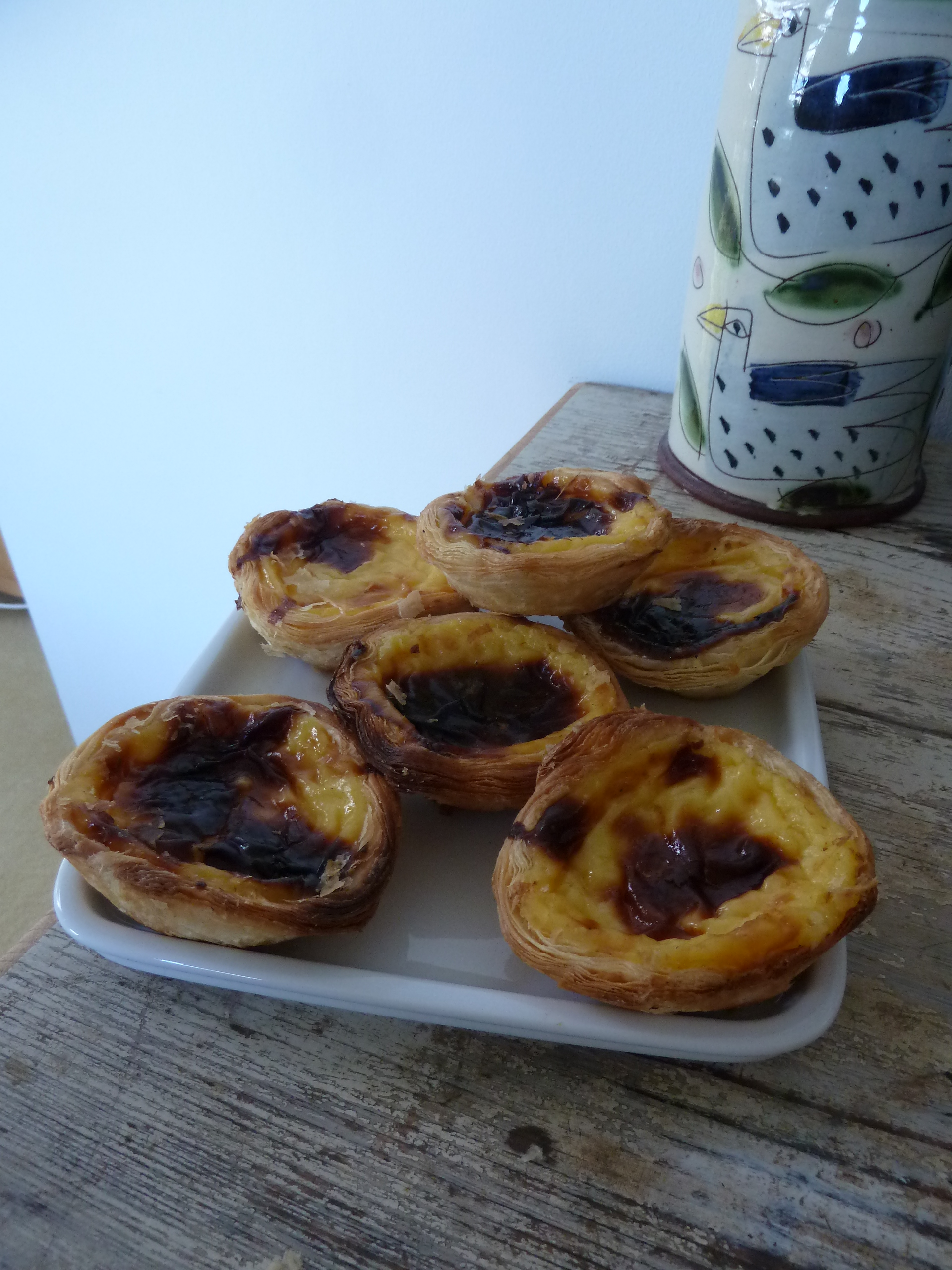
Joao Villanova-Smith makes authentic Pasteis de Nata. She should know, she’s Portuguese. Her kitchen is full of genuine pasteis tins all the way from Lisbon. I am toying with the idea that I might never need to make them because why would you with Joao living just up the road?  They require  (apparently) the fusion of maddening combinations of temperature characteristics – cool enough to set the wonderfuly lemony custard but hot enough to cook the pastry without burning and (this is the really maddening part) really hot so that they acquire their characteristic burnt sugar spots on top.  That’s it – I need never make them with Joao in close by. Just eat them.

Al Watts

All set for expansion, there are plans for new ovens, more Lisboa tins and a machine to make the pastry.  Go girl!

Venison with beetroot and chestnuts

Pictures of meat on a plate are not that attractive are they? So these are some of the other ingredients!

It’s November. You’re driving home from the station. The rain is slashing down, the leaves are falling and it’s dark.  You fall in through the back door wondering what’s for supper. And miraculously, there on the stove before your very eyes, someone has placed a large vat of venison casserole.  All you need to do it heat it up and make some creamy  potato and celeriac mash with a bit of wasabi in it?  Are you with me?

So what you needed to do was, the night before, lightly season and flour 1kg venison in a plastic carrier bag. Bounce it around a bit and all the pieces will be covered in flour.  Gently fry a large onion in oil and butter with a cinnamon stick, a bay leaf and two teaspoons of caraway seed.  When the onions are soft, add one medium sized grated (raw) beetroot and cook for a couple more minutes.  Remove from the pan.  Then, in batches, brown the meat in the pan, adding a little more oil if necessary. Return the onion and beetroot to the pan and mix into the meat.  Add one bottle of red wine and 200ml good dark stock (a cube will do), add seasoning, one chopped apple and a packet of Merchant Gourmet or similar vacuum packed (whole) chestnuts).  Stir well.  Bring to a gentle simmer, put the cinnamon stick back in and cook with the lid on for at least two hours.  By then the meat should be tender and the sauce reduced by 25-30%.  Now you can either eat it or leave it in the pan, covered, until the following night. In my opinion the flavour is vastly improved for an overnight slump in a saucepan. If you are really organised you could prepare equal quantities of potato and celeriac and put them in a pan of cold water – anticipating that dash home from work in the dark and the wet.

Either way, when you are ready to eat, bring the meat back to the boil and gently bubble away for another 15 minutes with the lid off.  Then remove from the heat.  This little rest will mean the meat relaxes a bit and the gravy is a bearable temperature so you might stand a chance of actually tasking it!  Meanwhile boil the potato and celeriac till soft then drain them and return to the pan with 50g butter and a good shake of white pepper, a good sprinkling of salt, and mash, mash, mash till creamy.  A potato ricer is perfect for this job but I hate washing it up! So when mashed, then beat beat beat with a wooden spoon. Then add 100ml sour cream or natural yogurt and a good squirt of wasabi (or english mustard, or a handful of cheese – whatever is good for you) and beat again.

P1020442

I recommend serving in a bowl, with feet tucked up, on the sofa, woodburner blazing and maybe a glass of dark ale. Or a large glass of red.  Because you’re worth it!

Old friends and cakes


An old friend is like a warm fragrant cake. Welcome, full of delicious nuggets of news and leaves a warm glow and a smile.  Today my old friend Sue was on her way over with tales of her daughter’s beautiful wedding day and her nephew’s third birthday party. Monty and I decided to make some apple and sultana muffins – so quick to make, from thought to fragrant production in 30 minutes. Then we settled down with coffee and cake for a good natter.

125g plain flour, 125g wholemeal flour, 125ml runny honey, 100g butter, 1 tsp bicarbonate of soda, 50g ground almonds, 175ml natural yogurt, 150ml milk, 1tsp vanilla extract, 1 egg. 1 chopped dessert apple (keep the skin on) 75g sultanas

Melt the butter, add egg, yogurt, honey, milk and vanilla and combine.  Sift the dry ingredients and fruit into the wet and stir round a bit. As with all muffins, don’t be too fastidious about this.  Line muffin tins with muffin cases or parchement paper. Pile in the muffin mixture.  Cook at 160C for 20 minutes or so.

Gorgeous. Just like old friends.

Domain name

Just so you know I have changed the domain name for this site to http://www.hecichera.com  this makes it easier to find, loses the WordPress suffix and should make it easier for you to ‘follow’ (which I would really appreciate) without having to go through the WordPress shenanigans.

Winter soup

How come winter set in before Autumn? Woke this morning to hard hail then flutterings of snow.  Hot soup. Winter soup.

I’d already boiled a ham hock a couple of days ago (cheap, cheap cheap, under £4 and enough meat on it for 6 generous helpings).  Boiled the hock in plenty of water, black peppercorns, a whole onion, celery stick and a carrot. And a few juniper berries and a bay leaf or two for good measure, skimming off the fat occasionally, then left in the water overnight.  In the morning took out the hock and skimmed the broth again and cooked dried green peas in the broth and left in the pan overnight.  I left the meat on the bone.

This morning I’ve just been pottering quietly, sweating off some chopped onion, celery, garlic, carrot and potato in butter and olive oil with a fresh bay leaf and some thyme leaves.  Then ladled in the peas and broth over the vegetables and boned the hock, chopping some of the ham hock meat into the soup, seasoned with salt and ground white peppercorns and set on a low heat to gently bubble.  It’s not ready to eat yet but when it’s lunch time I will check the seasoning again. And then eat it with fresh brown bread.

The rest of the hock meat will go into a creamy chicken and ham with tarragon pie.  Or in the freezer for another day.

Preparations are afoot

Preparations are afoot. For Christmas. For collaboration with local traders. For prepping food.

Spent a couple of hours this morning, feeling a bit unwell, but relaxing and making preserved lemons.  Let me know if you want me to reserve a jar for you. I use preserved lemons in all sorts of ways……. stirred into a cinammon and spice lamb tagine with a sprinkling of chermoula; chopped into a parsley and tomato laden tabbouleh; tucked inside a chicken before roasting, or chopped and scattered over a tray of garlic and olive oil rich roasted pumpkin, tomato, onion and feta.  When you use them remember to either adjust the seasoning (because they are preserved in sea salt and olive oil), or brush the salt off them before adding to a dish.  They will bring a wonderful frangrant piquancy, a tartness and an ability to enhance the main flavour of the whatever dish you are cooking.

In my kitchen, preserving lemons is not a precise science.  Simply take a few spare lemons chop into 6-8 pieces (leave the skin on). Pack into a sterilised jar with plenty of sea salt.  Add some lemon juice and top up with olive oil.  Sometimes I add caraway seed, or chilli seed or fennel seed.  Then just seal tightly and put in the fridge. They will last 8-12 weeks in the fridge.

This slideshow requires JavaScript.

On Wednesday I am meeting with Keith Charlish to work up some recipe cards to sell with his meat and game at Christmas. So look out for one-pot-pheasant, warm pigeon breasts with juniper and sloe gin, partridge and hock pie and gingered duck at The Paddocks Butchery before long. I also noticed he had made some South African ‘Boerwors’ sausages.  Had to buy some but haven’t cooked them yet.

Finally. Today I realised a lifetime’s ambition and have a knife block.  I’ve looked at them for years and felt rather ‘Nightmare on Elm Street’ about  them.  But then I found this little beauty.  My knives are a bit special to me – sad I know – and collected over the years. Many are Japanese and came from TKMax, purchased as one’s and two’s rather than as a full set of kitchen knives. So they are a raggedy bunch, nothing matches. But I love them.  The Japanese chopper, the little Sabatier paring knife, the Saji chef’s knife, the foot long gravadlax carver.  All spotted in the same way you spot a handsome guy across a room – it takes your eye, you smile, and sidle over…………. etc.  The biggest crime in the world was committed by my dear mum when she attempted to remove a plug which was stuck in the sink with my best paring knife. Which resulted in her snapping the end off trying to lever it out.  Its a long time since I have been as angry – and kept the lid on it!

Autumn leaf kicking

This slideshow requires JavaScript.

Well our holiday went in a flash, the tan is fading, the skin’s memory of sliding into still warm water in scorching sun is but a distant memory.

My poor chickens are flooded out and have muddy feet and produce muddy eggs as they kick them around the coop trying to settle. So the eggs always need a good wash when i bring them in. But they are so beautiful. How do chickens produce a perfect egg every day?  It’s a miracle.

The colours of the trees is just turning, gold, deep red, brown, and the leaves are beginning to fall.  And the rain is lashing down.  But a long walk in the rain has produced tons of blackberries, wild apples and bullace.  And I haven’t used up the last of 2011’s yet.  Delving in the freezer I unearthed a pot of blackberries, some ready made apple sauce and a number of escapee blueberries. See the results on ‘Dish of the Day’, along with Canadian Thanksgiving recipes from Katie and her Aunt Sue in Ontario.

This week I am going to be working with Keith Charlish from Paddocks Butchery, cooking up a storm of festive season recipe cards, especially for  game – really looking forward to it.

Bungay Food Fair

This slideshow requires JavaScript.

Oh Bungay.  For so many years – over 30 – I’ve been drawn to Bungay – To BlackDog Antiques, rifling around the mounds of tiles, fabric, furniture, to the restaurant that Robert and Tim used to run (and then moved to Norwich), to Crocks when it was first opened by Tony and Mary who used to sell us coffee from their shop in Ealing in the 70’s, to Wightman’s for fabric, to Nursey’s for sheepskin slippers, to Cork Brick Antiques for pictures – always a good showing by Margaret Thomas – and today also Bruer Tidman.  But the main pull was Tessa Newcomb’s new book The Adorable Plot. Tessa’s pictures, and her parents Godfey and Mary, have woven their way in and out of our lives over many years and the first picture of hers I knew intimately was that of a goat on board owned by Shirley.  I used to stare at it as we both emerged, blinking from divorce, addicted to drinking coffee, nibbling pretzels and plotting hugely successful Live Aid jumble sales. Tessa’s pictures are naive and yet evocative, simply portrayed but pulling on deep emotions.  Today I bought The Adorable Plot for Will and Katie.  Saving for a blue Fender and needing to earn money in the school holidays one year, Will painted the outside of Mary and Godfrey’s house.  Godfrey was charged with standing at the bottom of the ladder whilst Will painted the eaves. Godfrey, being Godfrey, forgot after a while and walked away to roll a fag or two.  Gradually the ladder slipped down the wall and Will ended up in the water butt!

Today there was a really simple and scrumptious food fair by the castle.  We found Shirley and Rob, taking a break from repairing The Wall inflatables, and instead were sliding more-ish parmesan biscuits off a plate at Tessa’s book signing.  We wandered over the road to look at the food. The sun was shining, it was warm and bright blue skies spread behind the oak trees. To think a week ago we were eating tapas in Soller in 30C (see future posts for Tapas).  My favourite stand was Imperial Wine and we were greeted by the eternally cheerful Su (see Peach Friand dedication) proffering a rather nice Lucien Lardy Fleurie la Roches Beaujolais in pitifully small glasses.  We had just missed her first performance – a ‘matching wine with food’ presentation. Established in 1995 its based in Bungay, a great company offering really good value wine and some real stonkers in the back room.  Make sure you visit. So so tempting

The Wild Meat Company offered something a bit out of the ordinary. Squirrel for £4.50!  I am pondering on what I would do with squirrel, but now know that one squirrel (grey) will feed one person, and apparently it’s very healthy meat because all a squirrel eats is fruit and nuts!! I might have to consult Hugh F-W for a recipe.

Johnny’s Girls at The Cow Shed – beautiful creamy un-pastuerised milk.  And I would give them ‘best in show’ for their labels. If i were not off the the Isle of Man tomorrow I would have bought a few litres and made some fulsome creamy yogurt with it.

Marsh Pig was another favourite. If you’ve travelled north on the A12 you will have seen their pigs ranged across the Breckland near Blythburgh.  Their passion is Salami’s and meats made from the leg meat.  The best on the stall (and I tried them all, including very very good chorizo) was the fennel salami.  Juicy meat cut through with fennel seed.  Tangy. Gorgeous.  Imagine it on a board with chorizo, manchego, membrillo and bread with a few olives thrown in for good measure.  And a robust Temperanillo.

Met up with old friends Fielding Cottage  who had a new product – goats curd.  It is tangy and light – just like a good ricotta.  Tonight I plan to twin it with chard and spinach, in a tart, with a little lemon zest.

The end to a perfect morning, we retired to Rob and Shirley’s for very good coffee, admired their house and particularly Shirley’s planting in their courtyard garden.  As a young, naive and horticulturally ignorant young woman (me), Shirley introduced me to her Jekyll inspired ‘white garden’ and the ghost of it was here today with tall, slender nicotiana sylvestris giving height and light to lush tropical planting including a magnificent echium.  Luckily it’s generous with its seeds and so I came away with a good sized plant too.   Thanks Shirl.

Spanish Markets


Just a brief interlude whilst we skip over to the mountains of Majorca to explore the markets – expect more on mushrooms, paprika, tapas, almonds, sobrasada, tumbet, ensaimadas………. stop me someone!  Back in two weeks.

Autumn mushrooms

Distracted in my pre-holiday tasks today by the sight of a mountain of foraged mushrooms on a stall outside Caruluccio’s.

I couldnt resist and walked away with Ceps, Porcini, Winter Chanterelles and Flats. And a good chunk of truffle butter all wrapped up in a little greaseproof parcel and string.  Great Scott their marketing is good.

So this evening I picked them over carefully, discarding grass, bracken and insects, checking no other little intruders of mushrooms pretending to be pukka were present. Then wiped them over and peeled the Porcini stalks, which were a bit gravelly.  Sadly found one of them full of little holes. Invaders had already eaten the inside.  Anyway, set the butter and some olive oil in a wide flat pan to melt gently, adding the zest of half a lemon and just a few chilli flakes. Threw in the chopped mushroooms (kept the Chanterelle whole) and grated over a small clove of garlic and let them stew for about 15 minutes, turning frequently. Then upped the heat and poured in 15ml good balsamic (the thick stuff) and 10ml light soy sauce.  Stirred again and bubbled up till the balsamic  almost evaporated.  Then added just two tablespoons of half fat creme fraiche and squeezed in the juice of half a lemon.  The temptation is to add too much cream but I find its too rich with the dusky mushroom and truffle.

Take mushrooms off the heat.  For two people, throw in three good handfull’s of papardelle pasta (thick ribbons) into a large pot of boiling salted water and cook till just al dente.  Spoon out about 3tbsp of the pasta water into the mushrooms and stir it in to loosen the sauce into an emulsion, then drain the pasta and whilst in the colander, add lots of black pepper.  Then put into the dish with the mushrooms and gently combine, adding a few slivers of sage and flatleaf parsley till the pasta is coated with glistening sauce and then add a generous handful of grated parmesan.

That’s all you need folks.  Simple. So tasty.  Glass of red, sofa, and Richard Thompson on the CD player.

Pasteis de Belem


Waiting for a train on a windswept and miserable Diss station in January my old friend Joao appeared like a vision. We hadn’t seen one another for nearly 20 years, other than across a crowded field at the Burston Strike School rally, and then only fleetingly. In the space of 1 hour 35 minutes we traversed the work, career, family stories, catching up, leaning over the table, laughing, touching hands and cupping faces affectionately. It was a joy.  More joyful still was to find that in her REd Riding Hood bag, were gorgeously warm and vanilla fragrant Pasteis de Nada – those emblems of Portugal and the Lusophere countries.  Joao was on her way to Portugal to see her mother, but via London to deposit three dozen Pasteis de Nada at her son’s birthday gathering.

The year before, Lynne and I had spent an adventure-and-a-half week in Lisbon staying with her brother and sister in law. Our best day (marred only by the stolen bag on the tram) was a slow and scorching wander along the waterside at Belem and then across to the Antiga Confeitaria de Belem to watch them make the little beauties, and then for us to eat them! It was my first introduction to the heaven which is a little pastry, warm and soft, filled with lemony, vanilla scented, cinammon dusted cream, cooked in the oven till slightly caramelised at the edges.

So Joao and I indulged in memories but also in pastries, and poor Adriano was a little short on his birthday order.  Earlier this year we spent a delectable long summer afternoon familia with Joao and Peter at their house drinking wine, eating Portuguese tapas and celebrating Alistair’s graduation.  For pudding, again were those Pasteis. Divine on a late summer afternoon, sprawling on the grass, grossed out on Bacalao, olives, salads and bread, and squinting at the sky through the trees.  Now Joao’s Pasteis can be found in outlets across the Waveney Valley, including  Diss station, where they tempt me every morning as I dive in the cafe for a quick coffee before catching the 07.02. Rarely have I been known to desist.

And so, to the arcane.  Today I transported 2 year old grandson to Dereham where he and I had a brief meeting with the accountant before emerging, blinking, into daylight.  And then to find, that along with a fine market on a Friday, there is also a Portuguese delicatessen. Oh glory. More Pasteis de Nada.     6 swiftly purchased and deposited at Lynne’s later in the day for Andy’s birthday on Monday.  These pastries are haunting me.

Norfolk food

This slideshow requires JavaScript.

It was bright. It was sunny. It was the day the Tour of Britain (cycling, for those not in the know) was coming to Norfolk.  Tour of Britain, combined with the Norfolk Food Festival at the Norfolk Showground?  It was like I’d died and gone to heaven.

Getting in was easy, no crowds, it was fairly early to be sure.  But then it was only 10.30am, and the cyclists didnt arrive until 3pm………   So I had plenty of time.   The main arena was stuffed with stalls and I was in my element.  After a swift circuit I watched the delightful Richard Hughes The Lavender House (surely one of the best places to eat in England and certainly my favourite in Norfolk) who was  making Empanadas but filled with a very un-Spanish FruitPig black pudding, apples and Mrs Temple’s piquant Binham Blue.  I tell you they were divine. All made in an hour including the dough.

The the long leisurely trawl round the artisan stalls.  Some women trawl for handbags and shoes.  I do that aswell, but never more pleasurable trawling to be had, than searching for good local ingredients and provendors.

EthnicFusion had an amazing array of pakoras, lamb and vegetairan samosas and onion bhaji’s.  That was lunch taken care of then! Samphire Foods are breeders of rare breed pigs and have a smallholding just up the road from me.  Their pork pies were selling like hot cakes (sorry for the mixed metaphor) and according to Giles Coren are the best you can buy.  Their smallholding is generally open one day a year in September and always worth a visit.  Years ago Don Lear used to sell cars in Diss. I bought one from him once.  But he has built up a fabulous business BhajiMan providing premixed spices and ‘recipes in a box’.  I have been known to throw together onion bhajis in an instant using his brilliant mix of gramflour and spices.  Gorgeous. He was doing a roaring trade – more than once I have thought what a brilliant business idea that is Don.

CrushFoods had a beautiful stall with their full range of cold pressed rape seed oils, dressings and grains and First Thyme had such a simple idea – cordials for kids made from chamomile, or raspberry or rosehip and hibiscus with no added sugar or preservatives. They looked so good I drank one myself.  Gorgeous.

I could go on and on of course but not without mentioning my favourite stand Little Melton Gourmet Yogurts  This stand was overwhelmed with visitors and it wasnt hard to see why.  Gorgeous thick creamy yogurt, sliced through with passionfruit, or lemon curd, blueberry or honey, mango or pear.  They sold out by the end of the day.

In between I watched the cycling. Of course the anticipation was wonderful, sadly Cavendish fell off at the entrance to the showground and limped home looking rather grumpy, battered and torn; and I saw the lean mean machine with is Wiggins, louche and willowy coming into the home run.  Magnificent summer for cycling.

But why was Little Melton Yogurt my favourite?  Well I had bought the (literally) last pot of passion fruit as I left for the car park.  It was literally park. Gridlock. Easy to get in, getting out was more problematic.  It took me 1.5 hours to exit the showground by which time I was famished.  And very hot.  So the gorgeous pot of passionfruit infused yogurt was sitting in my bag as,getting nowhere fast, I thrummed the steering wheel with my fingers, impatiently trying to ignore the lure of the cool, creamy, luscious delight.  No use!  After 30 minutes I had to have it – off came the lid. Damn. No spoon.  In went the forefinger and I ate it all. In the glaring sun. In the queue of traffic. All by myself.   Yummy!

Farmer’s Markets

This slideshow requires JavaScript.

Wymondham Farmer’s Market, third Saturday in the month,  is a non-negotiable date in my calendar. There’s something so seductive about getting there early, wandering up the quiet back streets, baskets idly dangling off my fingers, smelling coffee brewing in the cafe’s,  wondering what will be there to tempt and delight. This Saturday was no exception.

Exceptionally hot it was, 26C at 08.45, I pretended I was in Spain and fantasized about white peaches, giant tomatoes ripe for baking, toppling piles of broad beans, garlic and onions. As always, Wymondham FM delights (though no white peaches or broad beans).  Instead I went straight to the Fielding Cottage stall – full of goat.  Not an insult, definitely a compliment!  Andy and Helen were there with their hard cured goats cheese, and the wonderful soft feta-like cheese which I crumble into a plateful of salad, shoots, seeds and beetroot.  Their famous Billy Burgers are also fabulous, well seasoned and moist – believe me they are divine.  We had a quick conversation, took photos and a lovely invitation to develop some goat recipes. Already my brain is mulling this over – I’m thinking curry goat, or braised goat leg with aromatic oregano cooked like Kleftiko with a chunk of feta in the juices and finished off with a squeeze of lemon juice, or a rich tagine with prunes and almonds. www.fieldingcottage.co.uk

Only two steps to the right to Pye Bakery and their stall which groans under the weight of delicious breads and pizza heavy with herbs and olives.  I have my eye on an aromatic loaf of rye bread and a plump round focaccia studded with rosemary are carefully laid in the basket. And my favourite, wholewheat with caraway. Yummy  (with feta, or a soft terrine of rabbit and pistachio with quince chutney on the side). Anyway, two of those please. www.pyebaker.co.uk

Then it’s over to see Tim at MacaronsandMore. You might remember Tim as a finalist in Masterchef. My only claim to fame there is that I know his dad! Tim is King of all things patisserie but in particular his macarons, and my mouth was already watering in anticipation of macarons at tea time – luckily Jane and Dave were staying so I could indulge in a box of 12.  Consider this:  violet and blackcurrant, praline, salt caramel (my favourite), lemon, passion fruit and milk chocolate, gingerbread and chocolate, all in a lovely box, sitting in your fridge just waiting for tea-time.  Torture!  Tim and I chatted about cooking business and cookery writing – watch this space on that one.  Lucky for you, Tim does mail order www.macaronsandmore.com

Those were my three favourite food stalls on Saturday, but I just had to whizz over to the plant stall, full of succulents and tropicals as well as beautiful species geraniums and pelargoniums. Many of which have luxuriated in my courtyard for a few years. But I was tempted by a Fatsia and a Sinocrassula yunnanensis .

Saturday started well – farmer’s markets rule!

Coast

Don’t you just love week-ends where everything just seems to fall into place?  The sun shone, it was hot. We went to the beach in Gorleston. We hadn’t planned to go to the beach but we ended up meeting friends,  going to their dinky little house right by the sea for the first time, imagining what it would be like to smell the sea, hear the sea, wander by the sea every day. We drank tea on a beach full of families in various states of dress and undress and sometimes in-between, shuffling undergarments on and off under inadequate towels, people calling out to one another, shaking sand from clothes, rolling up wet swimming gear  and stowing it in bags; swimmers and body-boarders, sailors and snorkellers.  After a long walk and a long companionable talk, back for another cuppa and then to Gt Yarmouth – memories of childhood holidays, the push-penny arcade games, the neon lights, the clip-clop of horses up and down the prom. The fish and chips at the Las Palmas fish and chip restaurant were divine; hot, fresh, crisp and soaked in vinegar. Violently green mushy peas.  Simply wonderful. Then on to the Hippodrome Circus – just as I remembered it aged 9, lights, music, laughter, high wire acts, synchronised swimming. It was 1962 all over again!

Wandering through South Norfolk

IMG_0486.JPG (2)1-photo (3)-003A leisurely drive to Rumburgh Buck to have lunch with Dinah today reminded me of the wonderful Rumburgh Rollicks of 25 years ago, cooking up vegetable curry by the vat load as part of the Beano’s contribution to the Rollick. Then setting up stall, cooking on a Primus stove selling veg curry in pitta bread for a quid.  Those were the days…………  lines of people waiting for our food and reminding us to ‘come back next year’.

Beano’s was a wholefood shop ahead of its time in Harleston, where you could buy the complete range of #wholefoods sold in Rainbow (but in Harleston – where there was only one bus  a day to Norwich); and Pete’s bread (as everyone knew it) – made in Metfield  and delivered by van every morning but Monday.  One delightful customer would come in every Monday and raise merry hell because there was no bread, he became known as the no-bread-on-Monday man.  Well truth to tell he was known as something much less flattering and definitely not PC so I am not prepared to commit it to the page!

photbackup march14 181

We would hand bag all the produce, have disasters with bulk-buys of concentrated apple juice, fall over laughing at the labels produced by the gorgeous and dyslexic YOT girl, and cook up a storm every day on a two ring stove and a small oven.  Marion and David were pioneers. Happy happy days.